
Category: Robotics
-
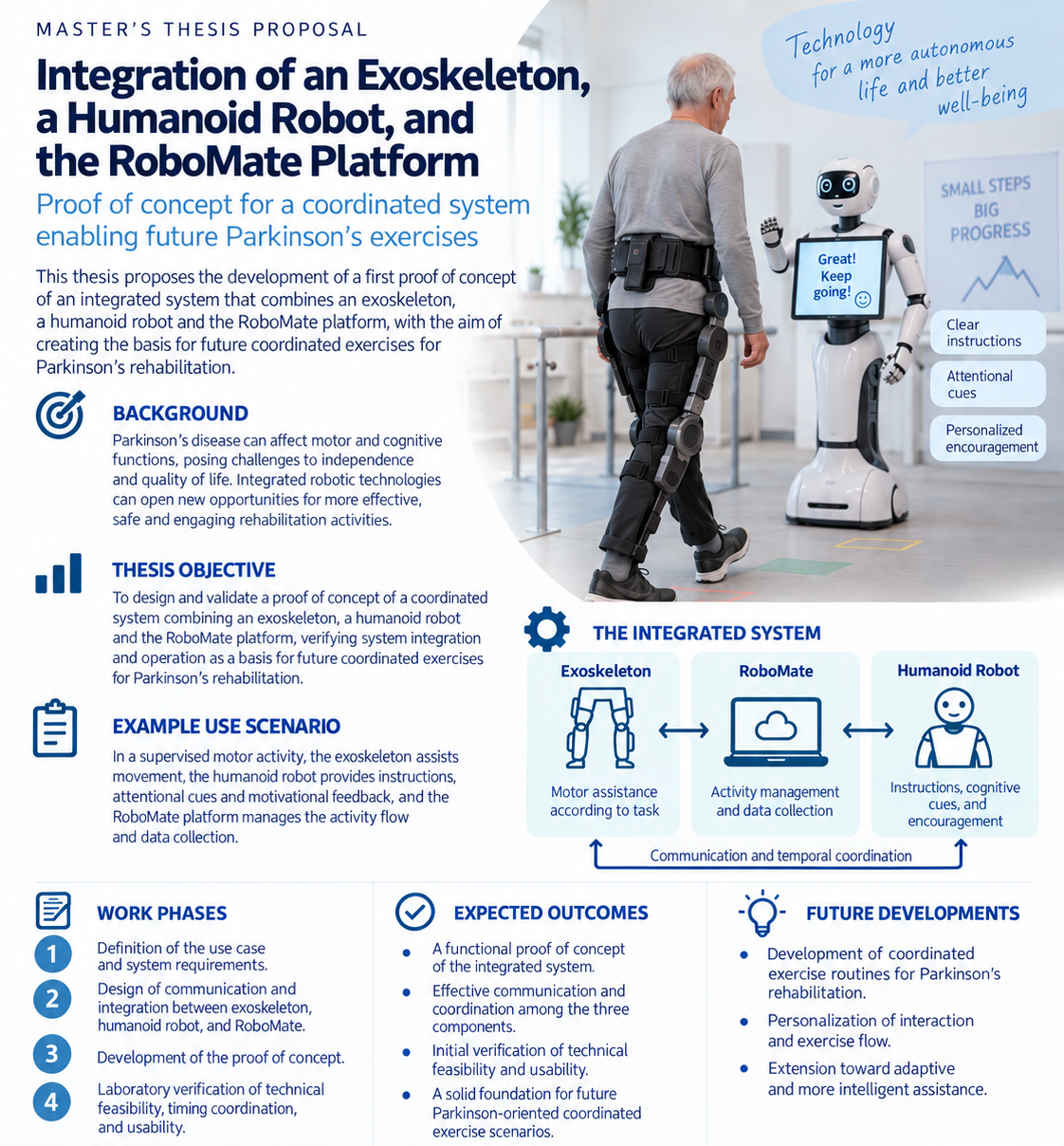
Integration of an Exoskeleton, a Humanoid Robot, and the RoboMate Platform: A Proof of Concept for Coordinated Parkinson’s Exercises
Prof. Loris Roveda: loris.roveda@polimi.it
-

Reduced-order aeroelastic modeling and control of inflatable multirotor drones
Inflatable and soft structures offer interesting opportunities for the development of lightweight, compact, and deployable aerial vehicles. In particular, multirotor drones based on inflatable structural frames could combine conventional propulsion and control systems with lightweight and compliant supporting structures. Such configurations may enable drones that can be compactly stored and rapidly deployed, while also providing…
-
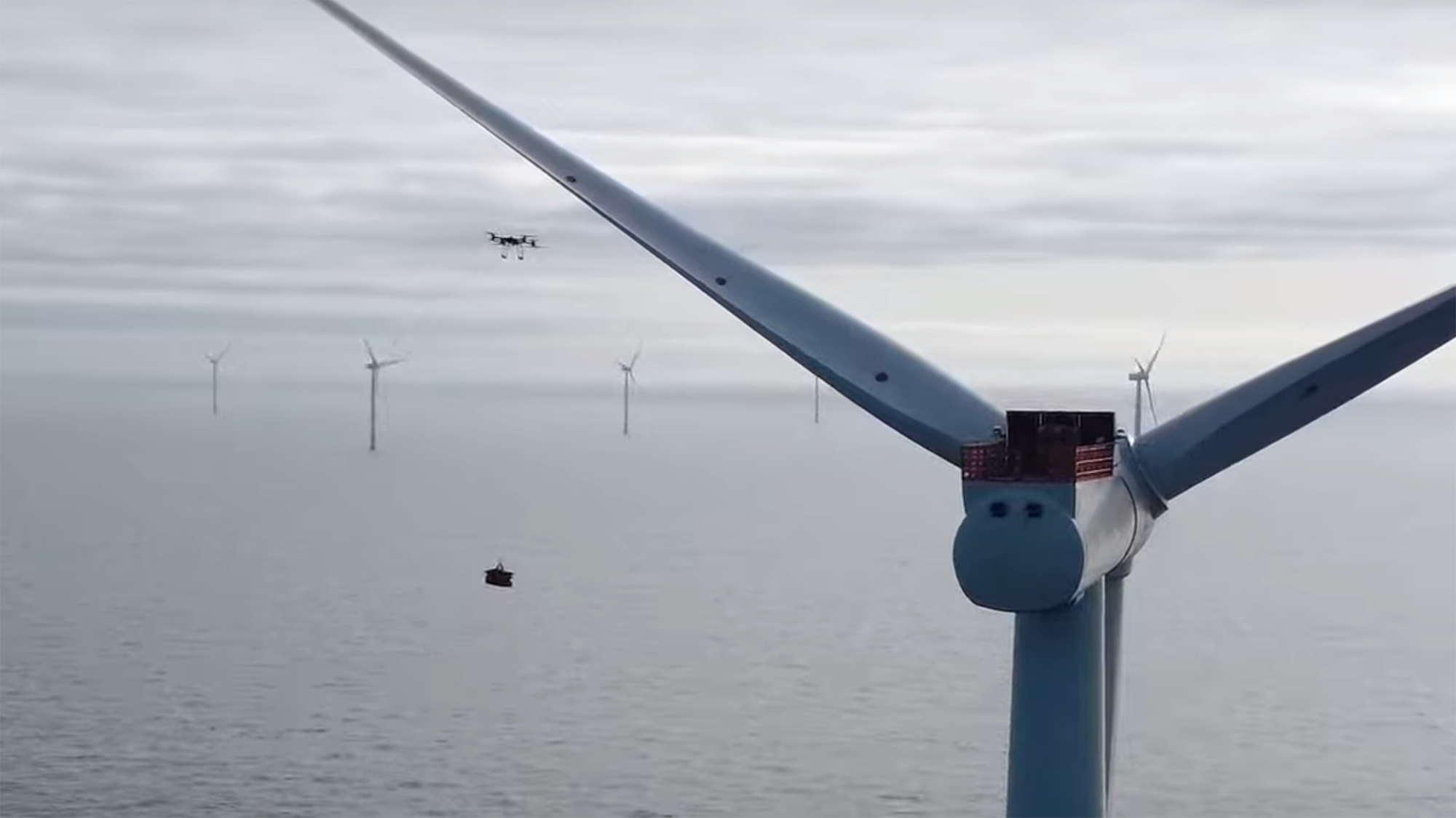
Aerodynamics of drone flight in complex wind farm flows (no CFD)
The use of drones in wind farms offers significant opportunities for automated inspection, measurements of the atmospheric wind, and the transport of tools and equipment. In these applications, drones may operate close to wind turbines and therefore encounter a highly complex aerodynamic environment characterized by atmospheric turbulence, wind shear, and the unsteady wakes generated by…
-
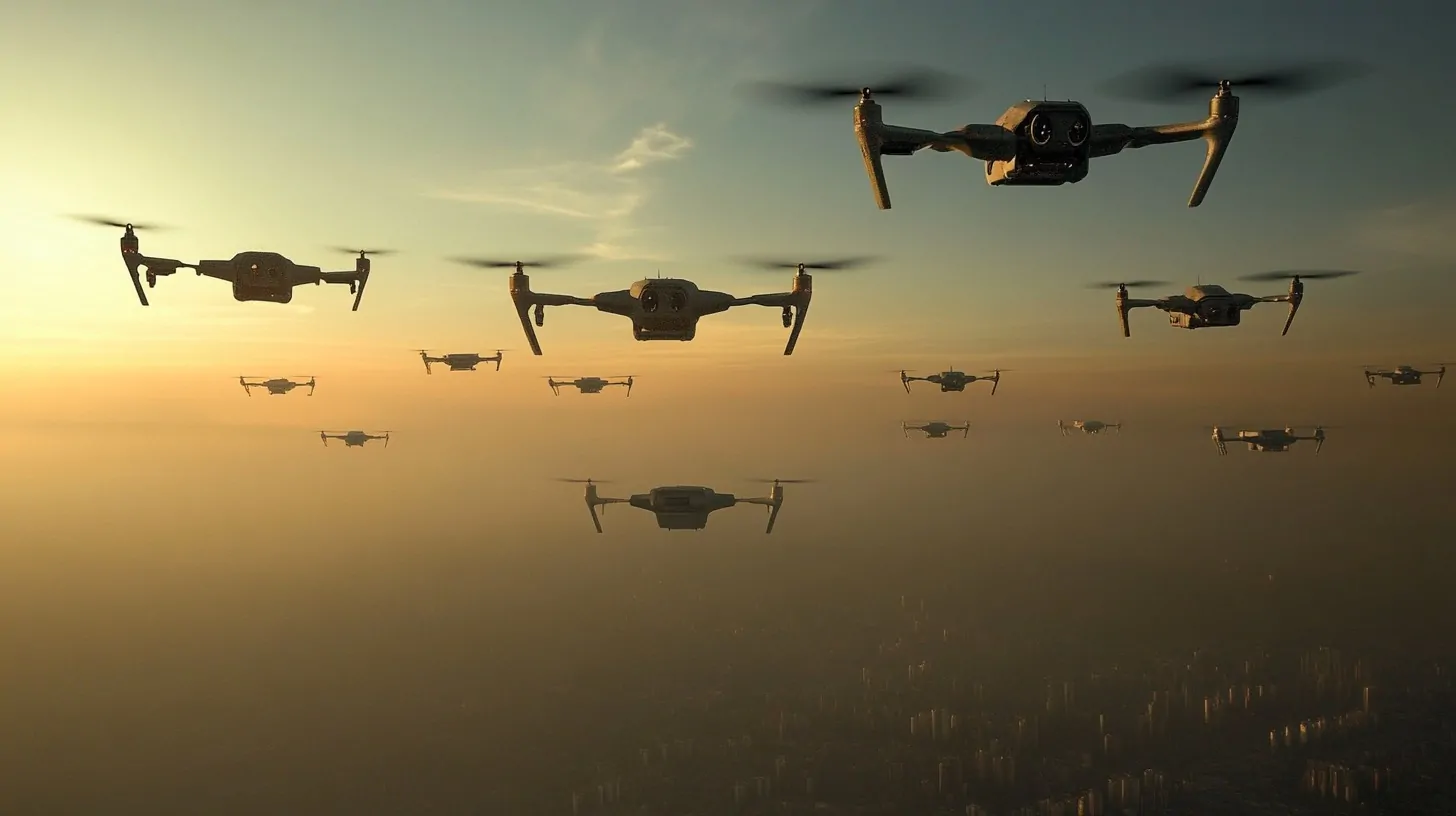
Physics-based aerodynamic modeling of drone formation flight (no CFD)
The rapid growth of autonomous aerial systems is driving the development of drone swarms capable of performing cooperative missions such as environmental monitoring, infrastructure inspection, search and rescue, and parcel delivery. As these applications increasingly rely on multiple drones operating in close proximity, aerodynamic interactions between their rotor wakes become an important factor affecting flight…
-
Control of a Soft Mackerel-inspired Robot
This thesis focuses on the development of the control algorithm for a mackerel-inspired robot. The robot has a rigid head containing sensors and motors, a soft body made of silicone rubber with a TPU-made backbone, and a compliant caudal fin. The objective of this thesis is to develop a control algorithm using ROS2 to enable…
-
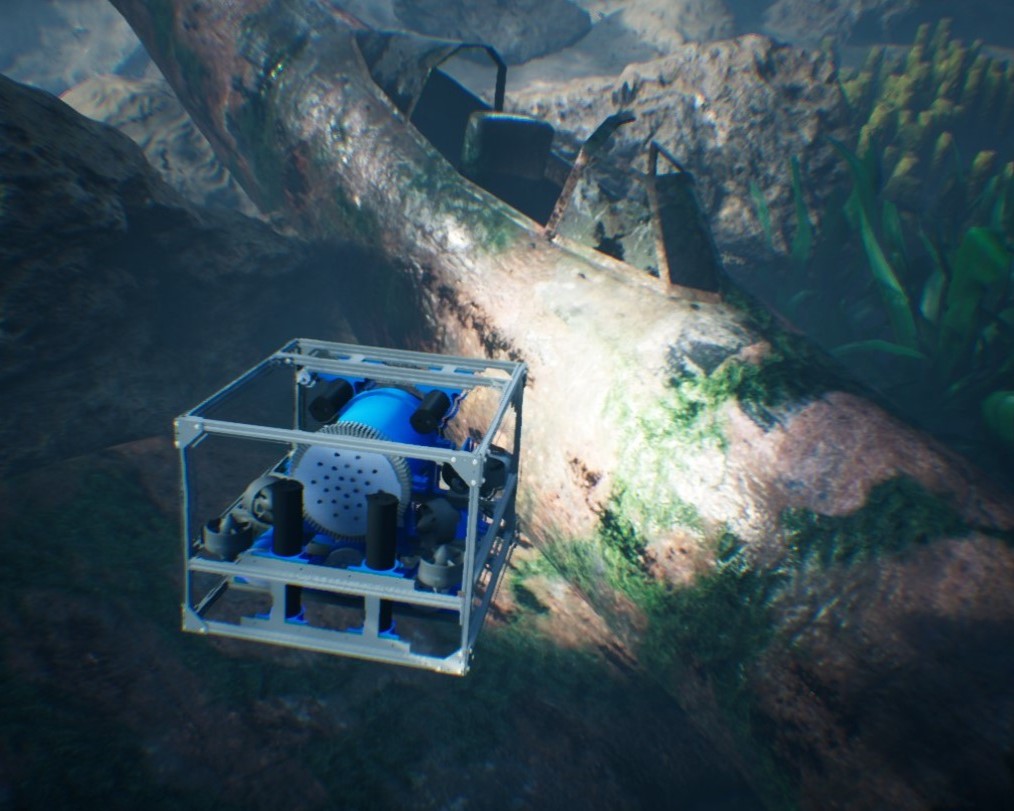
Bridging Simulation and Reality for Autonomous Underwater Vehicles
Autonomous Underwater Vehicles (AUV) are subject to highly non-linear hydrodynamic forces, significant parametric uncertainty, and unpredictable environmental disturbances, all of which make robust low-level control a persistent open challenge. This thesis investigates control strategies for AUV motion control with a focus on robustness, the ability of a controller to maintain acceptable performance despite uncertainty in…
-
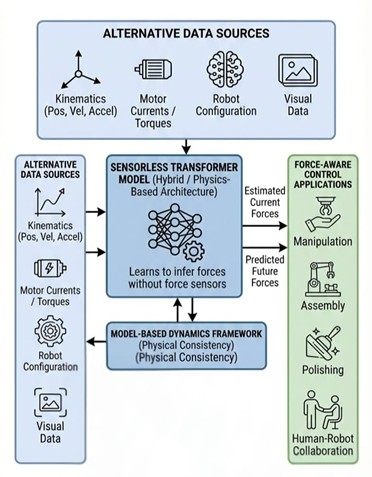
Sensorless Transformer for Interaction Force Prediction and Estimation
While recent work has shown that generative AI models, like transformers, can be used to predict future interaction forces, given past recorded data, including recorded forces, many platforms lack force sensors or cannot reliably record past forces. To bridge this gap, this thesis aims to augment a transformer model so it can estimate current interaction…
-
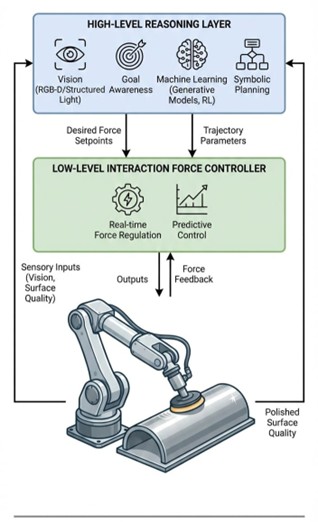
High level reasoning layer for a learning-based interaction force controller for autonomous polishing
This thesis proposes to equip an existing low-level predictive interaction force controller – developed for compliant tasks- with a high-level reasoning layer that autonomously manages polishing operations. While the force controller reliably regulates contact forces and nominal trajectories in real time, it lacks environmental context and goal awareness. The research goal is to design and…
-
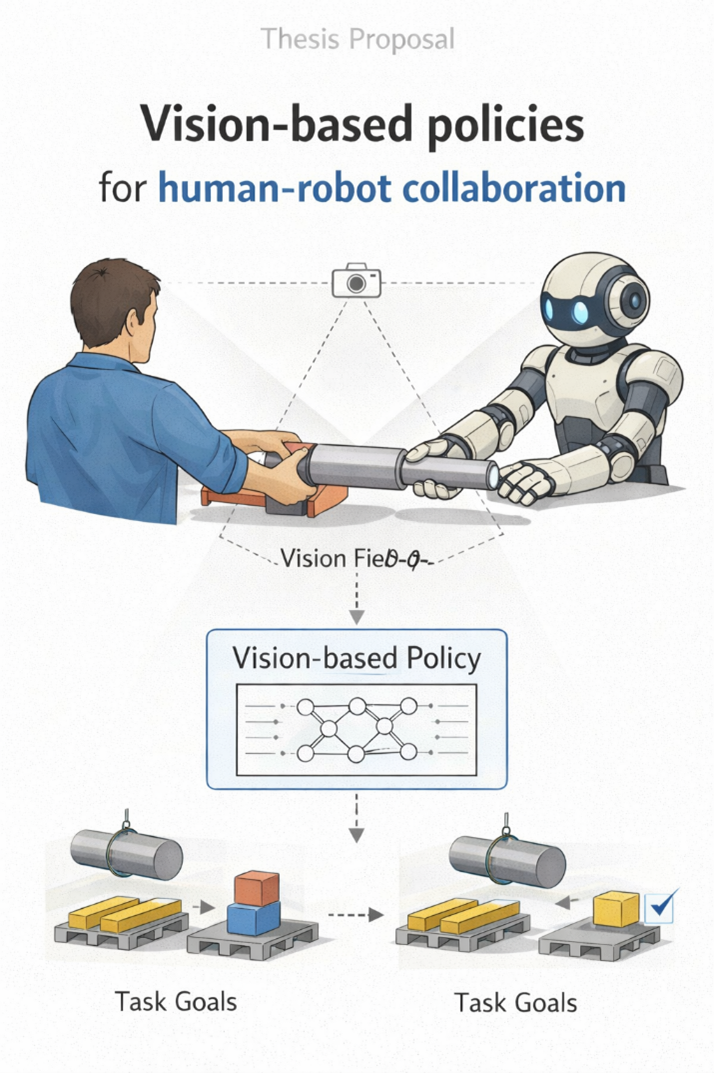
Vision-based policies for human-robot collaboration
This thesis investigates vision-based policies (e.g., VLAs, diffusion policy, flow matching) for human-robot collaboration. Despite standard collaborative controllers which make only use of the robot and (if available) human states, vision-based policies are trained additionally on images captured during the task execution. This provides the robot with the possibility to embed the perception of the…
-
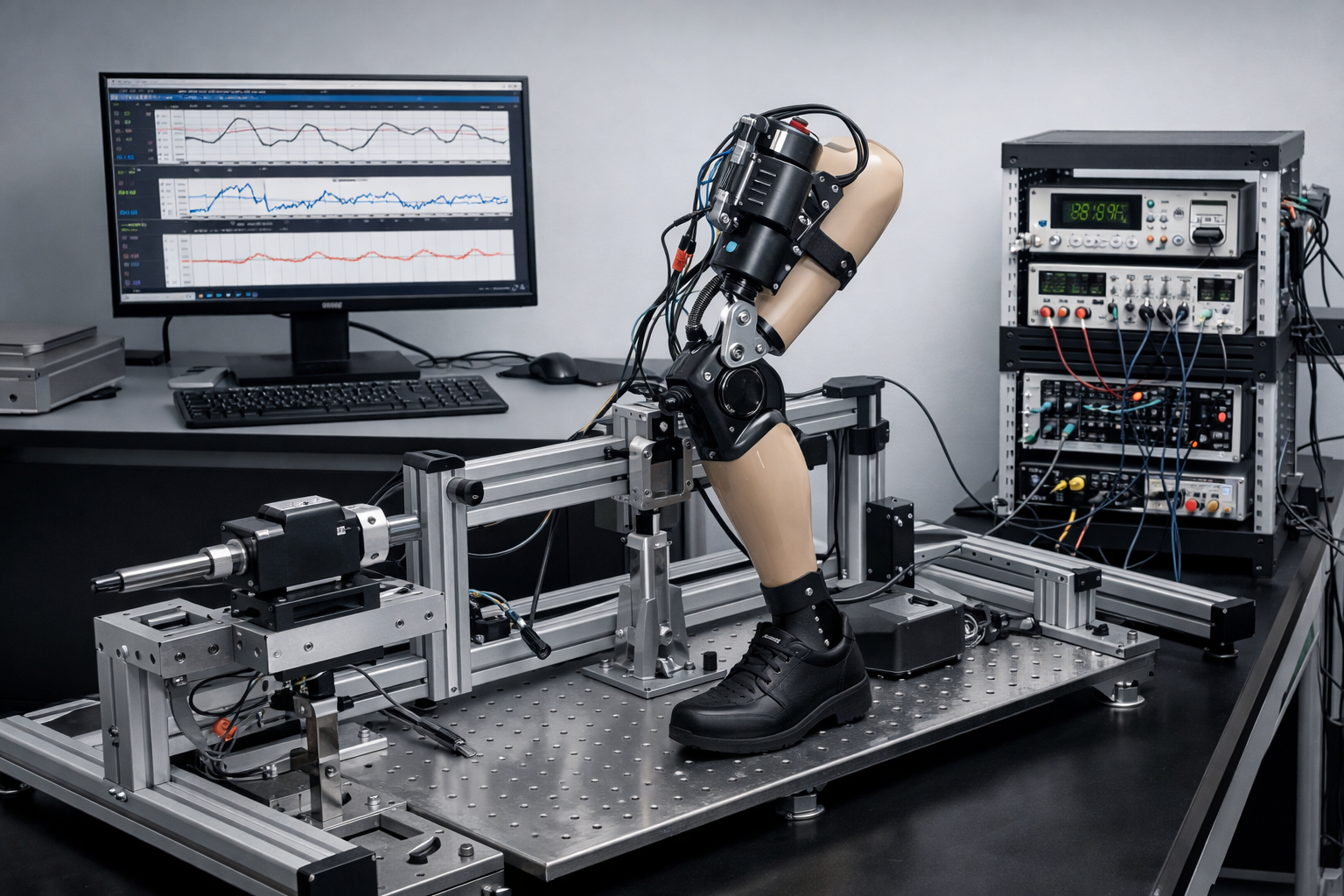
Development of an adaptive control architecture and test-bench validation for a knee joint of a transfemoral prosthesis
Motivation of the study. Transfemoral lower-limb amputations significantly impact mobility and quality of life, motivating continuous research and development in the field of active prosthetic devices. In recent years, powered transfemoral prostheses have emerged as a promising solution to restore more natural and efficient gait patterns by actively assisting the user during locomotion. A key…