
-
Towards Realistic Modeling of Acoustic Cloaks
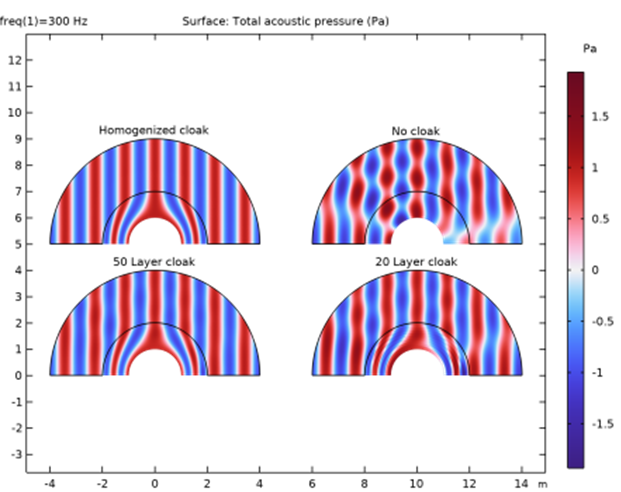
Acoustic invisibility—guiding sound waves around an object so that it becomes effectively undetectable—has rapidly emerged as a fascinating frontier in engineered materials. Among the most promising solutions are pentamode metamaterials, artificial lattice structures designed to control wave propagation with remarkable precision. In numerical studies, however, these materials are typically approximated through homogenized models, where complex microstructures are replaced by equivalent continuous media to significantly reduce computational cost. While efficient, this simplification comes at a price: it neglects crucial real-world features such as lattice distortions, cell-size variability, and manufacturing imperfections. These effects can substantially alter the acoustic response of the cloak,… Read more
-
Engineering Stability in Extreme Elastic Metamaterials
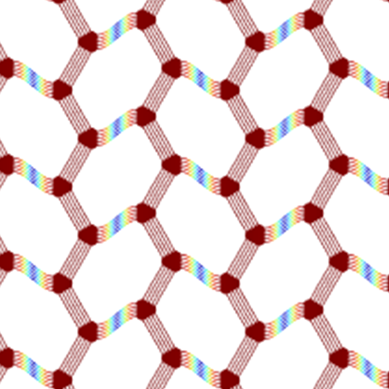
This content is restricted. Read more
-
Metamaterials-based structural health monitoring
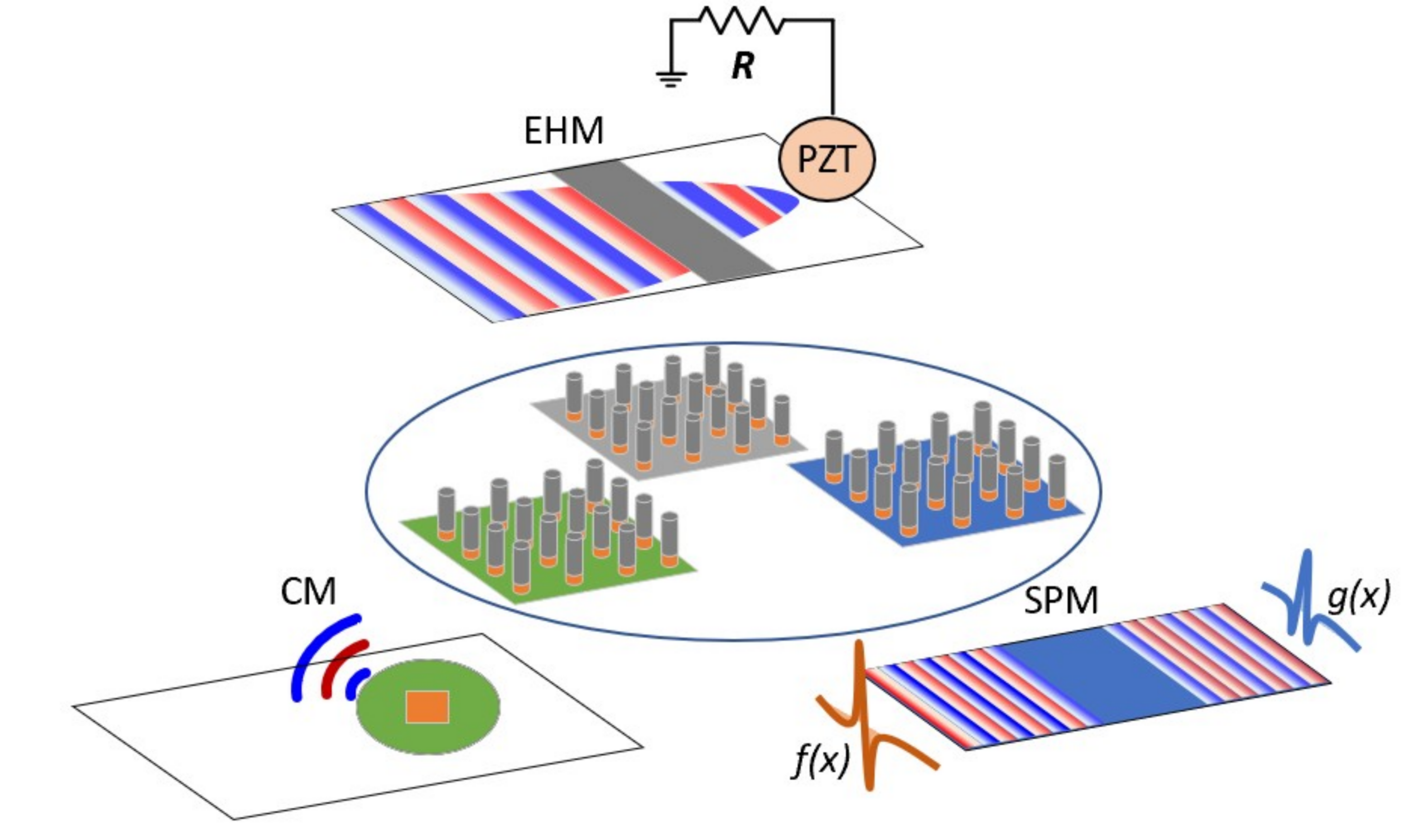
The aim of this thesis is to explore numerically and experimentally the fundamentals of wave elastodynamics in active, nonlinear, and topological metamaterials, and to identify functional behaviors that can be engineered to realize modules with a well-defined functionality. The implementation, then, consists of a network of modular transducers that can be easily embedded in a host structure and with self-powering capabilities. The transducers are meant to either generate an input wavefield or, given an input one, provide an output signal which embodies relevant information regarding static or dynamic structural responses, to be used for structural health monitoring (SHM) and non-destructive testing (NDT). In… Read more
-
Metamaterials-controlled microfluidics
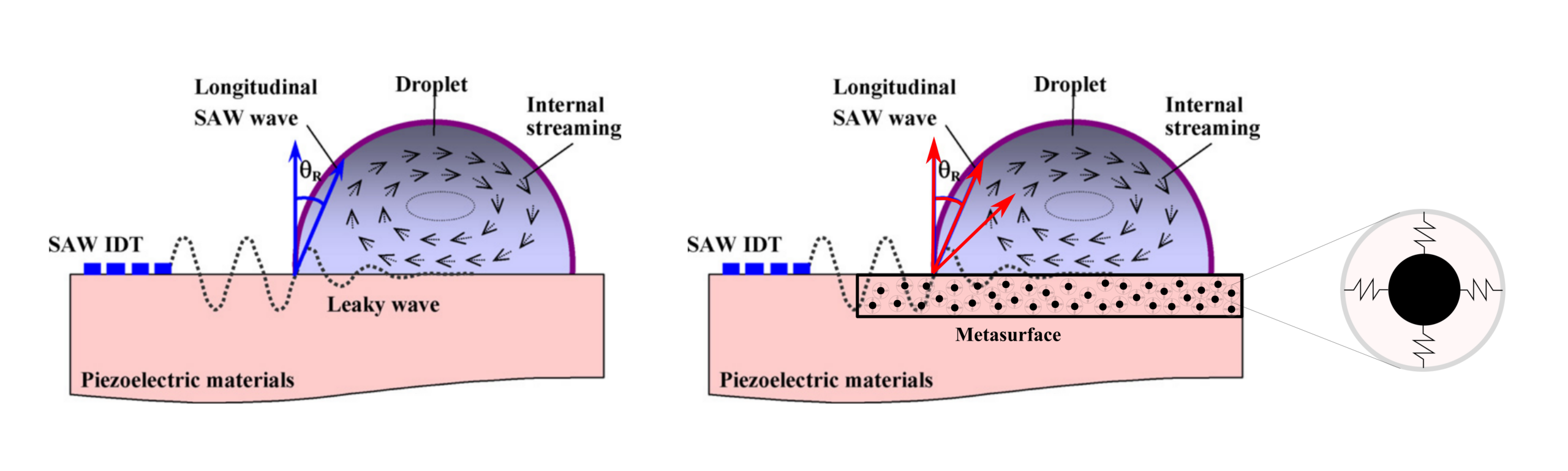
Leaky waves exist in correspondence of a boundary between a fluid, when the velocity of the wave propagating in the solid is greater than that propagating in the fluid. As a result, there is a radiation mechanism that takes place, whereby the energy, initially sitting in the solid, propagate in the fluid at a fixed angle. At the micro-scale, this phenomenon is employed to drive small liquid droplets (see the figure on the left). The aim of this thesis is to develop metasurfaces capable of controlling the radiation angle and intensity. These radiation attributes, in turn, allows controlling the velocity… Read more
-

Metamaterial-based physical neural networks and analog computing
Elastic metamaterials are formed by a spatial arrangement of small-scale unitary elements, yielding unusual dynamic characteristics at the macro-scale. Each element can be seen as a “mirror”, that is capable of refracting or stopping waves and vibrations to the next-neighbours. From a topology viewpoint, artificial neural networks (ANNs) and metamaterials share a similar structure, whereby a number of elements are functionally connected to produce desired input-output relations. However, this task usually requires extensive data processing in digital domain and a relevant amount of computational power. The goal of this thesis is to develop meta-micro electromechanical structures (metaMEMS) that emulate the… Read more
-
3D acoustic invisibility cloak
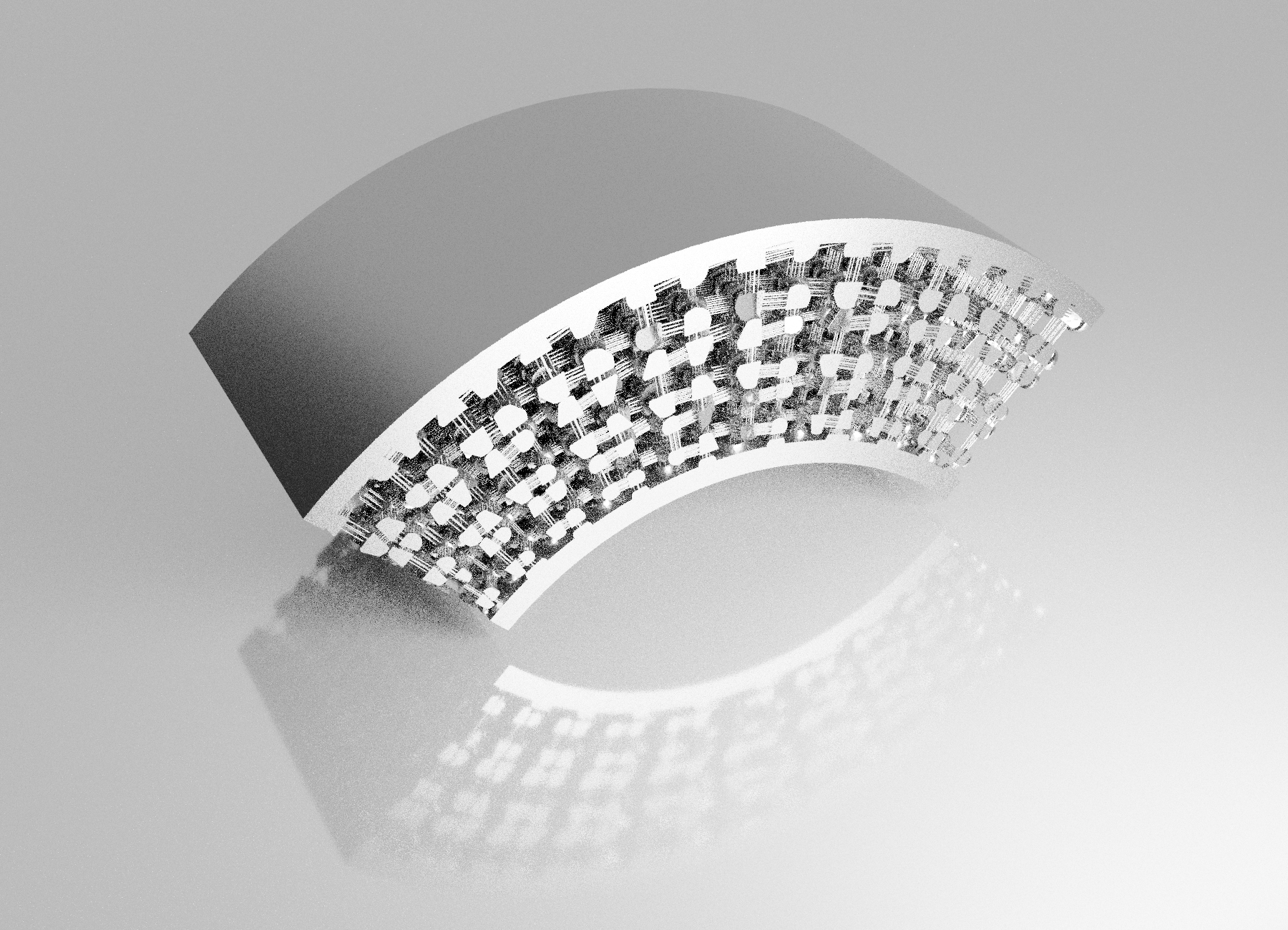
Acoustic metamaterials gave birth to the engineering counterpart of amazing cutting-edge novelties from physics, which discovered and proved unusual ways for steering pressure waves. Outcomes such as superlensing and invisibility cloaking are the most famous and impressive applications. However, the practical realization of these applications remains a significant challenge. Our research group is dedicated to advancing this frontier by focusing on the design and production of a 3D acoustic cloak aiming to potentially render submarines invisible to sonar detection. Following a complete investigation of analytical and numerical models, the candidate will also acquire hands-on experience with advanced manufacturing techniques, including… Read more
-
Transcranial focused ultrasound via metamaterial engineering
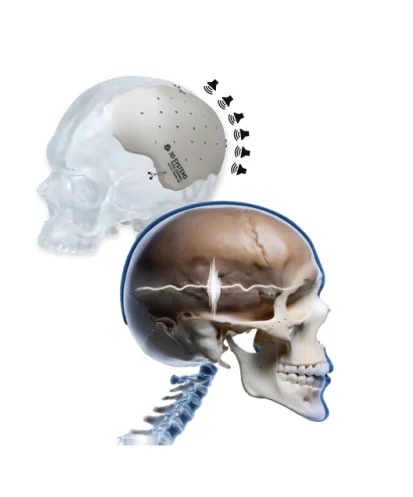
DETAILS: the aim of this project is to study a metamaterial structure capable of focusing ultrasound from outside to the inside the skull. In this field, the state-of-the-art ultrasound technology features a hemispherical transducer array with many piezoelectric elements operating around a central frequency of 650 kHz. By leveraging complex electronic circuits the system allows delivering tailored amplitudes and phases to each transducer, focusing sound from outside to inside the skull into a spatial region as small as a wavelength. However, skull-induced aberrations reduce the maximum pressure, shift the pressure peak, broaden the main lobe, and increase sidelobe effects. These… Read more