
-
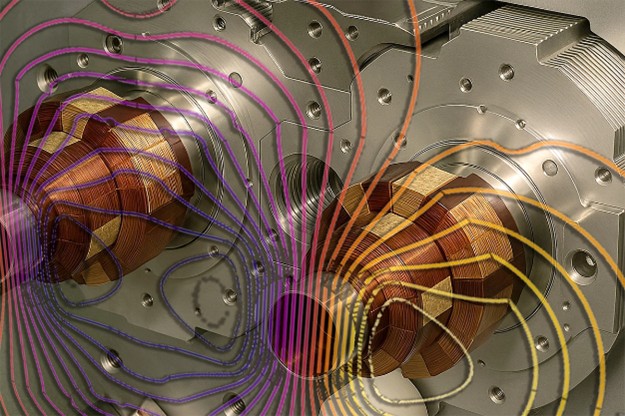
Real-Time State Estimation and Quench Prevention in Superconducting Magnets
This thesis focuses on the development of a real-time state estimation system for superconducting magnets, aimed at detecting early signs of instability and preventing quench events. The activity will investigate the use of advanced estimation techniques to reconstruct the internal electro-thermal state of a superconducting coil from available sensor measurements. The student will develop numerical models of the magnet dynamics, including current distribution, temperature evolution, voltage response and thermal disturbances. These models will be used to design real-time observers capable of identifying abnormal operating conditions before they evolve into a quench. A key part of the thesis will be the… Read more
-
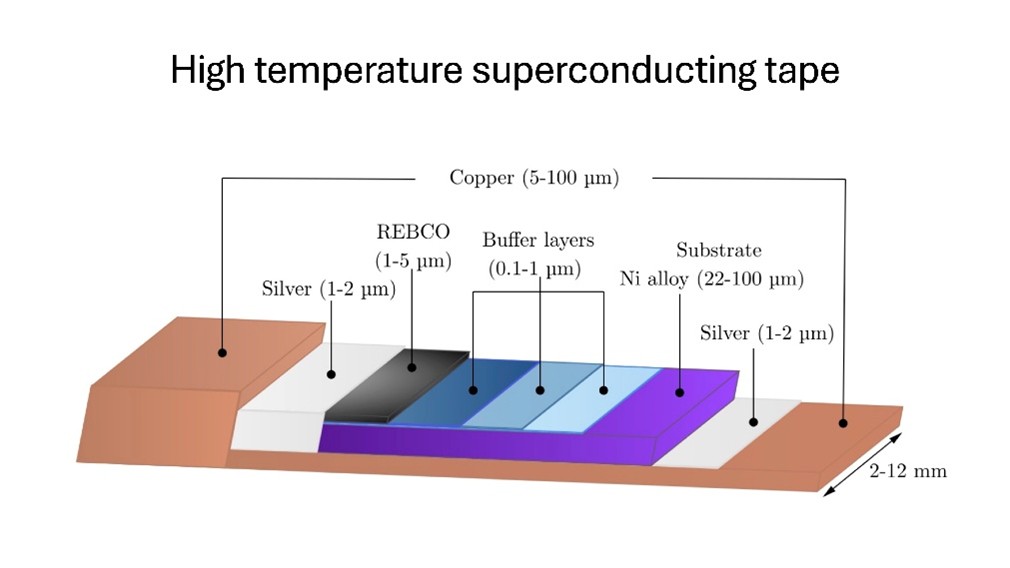
3D-Printed and Topology-Optimized Structures for Superconducting Magnets
This thesis focuses on the design, structural analysis and topology optimization of advanced components for superconducting tapes and superconducting magnets. The activity will explore how additive manufacturing can be used to create lightweight, mechanically efficient and highly customized support structures able to operate under the demanding conditions of high-field superconducting systems. The student will investigate the mechanical behaviour of 3D-printed components, superconducting tapes, supports and magnet assemblies subjected to electromagnetic loads, thermal contraction and cryogenic operating conditions. Particular attention will be devoted to stress redistribution, material selection, anisotropic properties of printed parts, manufacturability constraints and the integration of optimized geometries… Read more
-
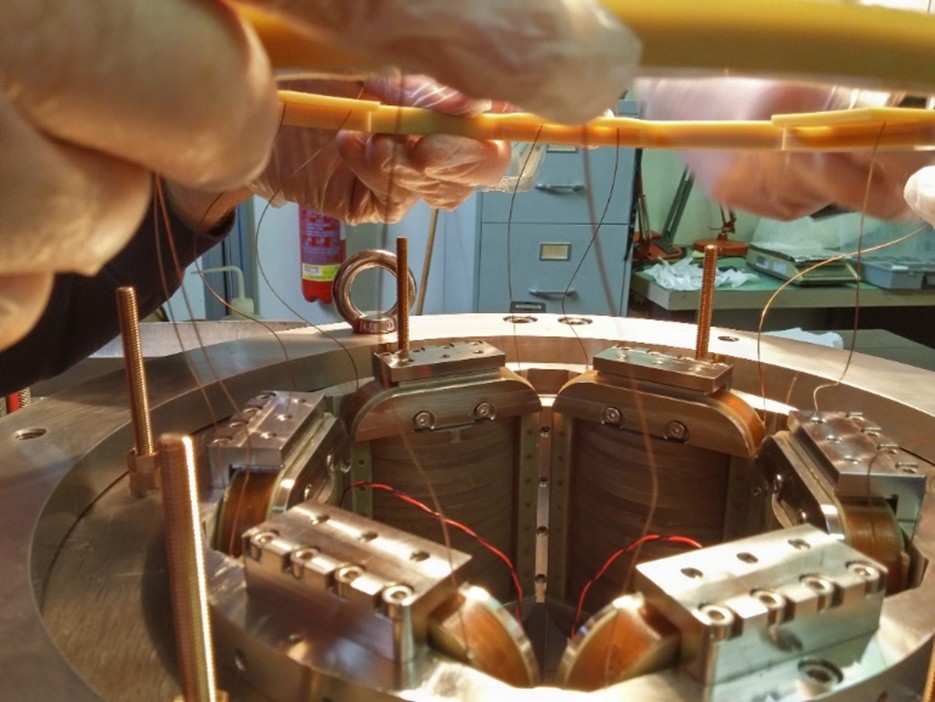
Mechanical Design of Support Structures for High-Field Superconducting Magnets
This thesis focuses on the mechanical design and numerical assessment of support structures for next-generation high-field superconducting magnets, operating in the 14–20 T range within CERN-related accelerator magnet development. The thesis will be carried out in collaboration with INFN, providing the student with direct exposure to advanced research activities in superconducting magnet technologies. These systems are extremely challenging because very large electromagnetic forces must be sustained while the magnet operates at cryogenic temperature, where materials undergo strong thermal contraction and their mechanical properties change significantly. The student will analyse the structural behaviour of coils, collars, shells, spacers and support components,… Read more
-

Closed-Loop, Sensorless Position Control Algorithm for Directional Proportional Electrohydraulic Valves
The objective of this thesis is the development of an innovative closed-loop, sensorless position control algorithm for proportional electrohydraulic valves, based on the indirect estimation of the electromagnet inductance, in order to ensure good control accuracy and repeatability. This approach makes it possible to eliminate the use of an LVDT position transducer, resulting in a considerable cost reduction. The thesis will be carried out in the company’s R&D laboratory, it will require the creation and validation of a Simulink model of the valve, the development of the electromagnet inductance estimation algorithm — and consequently the estimation of the moving element… Read more
-

Optimal Control of Flow-Induced TRAPs Using Spinning Robots
This project combines optimal control, fluid mechanics, and dynamical systems to design and steer transport and accumulation regions (TRAPs) in fluid environments using spinning robots as flow actuators. By controlling rotation speed, direction, and robot coordination, we aim to generate tailored flow structures that selectively trap floating particles or swimming microorganisms. The theoretical component builds on physical and dynamical-systems models developed in our group to identify and control attracting coherent structures in unsteady flows. Theoretical work can be complemented by experimental validation in collaboration with colleagues in UCSD Physics. The project establishes a principled framework for programmable particle aggregation, sorting,… Read more
-
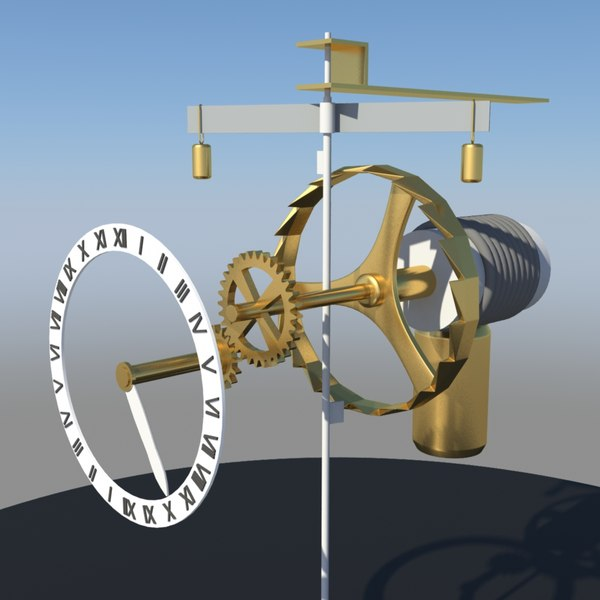
Multibody simulation of medieval mechanical clock
Background and MotivationThe verge-and-foliot escapement is among the earliest mechanical regulation mechanisms, yet its motion and timekeeping performance remain challenging to predict quantitatively because the device operates through intermittent contact between the crown wheel teeth and the pallets mounted on the verge. From an engineering standpoint, this makes the system highly sensitive to geometry, inertia distribution, clearances, and frictional losses. A modern multibody (MBS) framework—combining rigid-body dynamics, realistic joint models, contact/impact laws, and friction—can provide a predictive tool for understanding how design and manufacturing choices affect rate stability, wear, and efficiency. Such a tool is also valuable for horological reconstruction,… Read more