
-
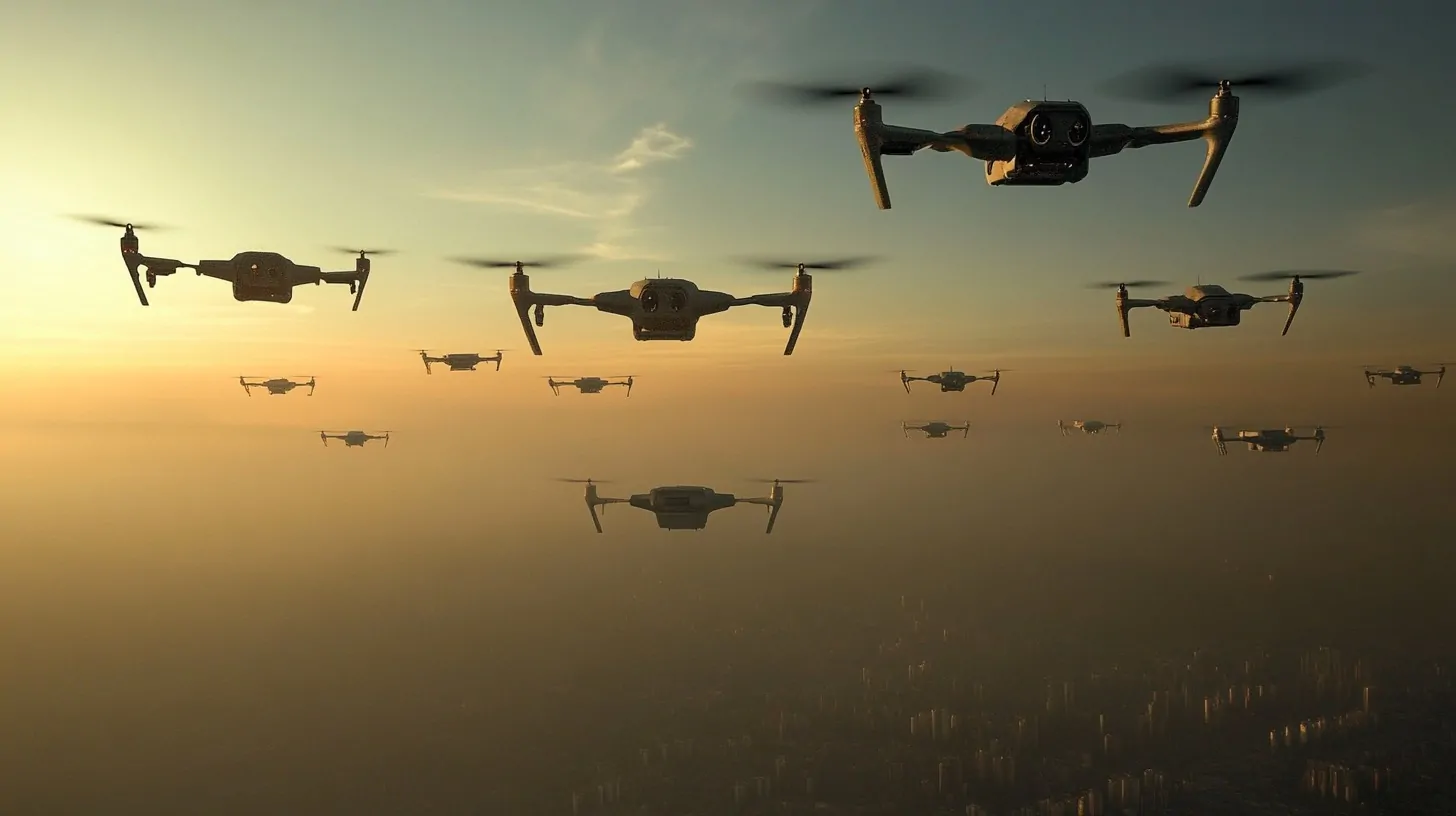
Physics-based aerodynamic modeling of drone formation flight (no CFD)
The rapid growth of autonomous aerial systems is driving the development of drone swarms capable of performing cooperative missions such as environmental monitoring, infrastructure inspection, search and rescue, and parcel delivery. As these applications increasingly rely on multiple drones operating in close proximity, aerodynamic interactions between their rotor wakes become an important factor affecting flight efficiency, stability, energy consumption, and control performance. Current approaches for the simulation and control of drone formations typically neglect these aerodynamic interactions or represent them using highly simplified models. On the other hand, high-fidelity Computational Fluid Dynamics (CFD) simulations are too computationally expensive to support… Read more
-
Control of a Soft Mackerel-inspired Robot
This thesis focuses on the development of the control algorithm for a mackerel-inspired robot. The robot has a rigid head containing sensors and motors, a soft body made of silicone rubber with a TPU-made backbone, and a compliant caudal fin. The objective of this thesis is to develop a control algorithm using ROS2 to enable underwater navigation. Contacts: Giovanni Bianchi Read more
-
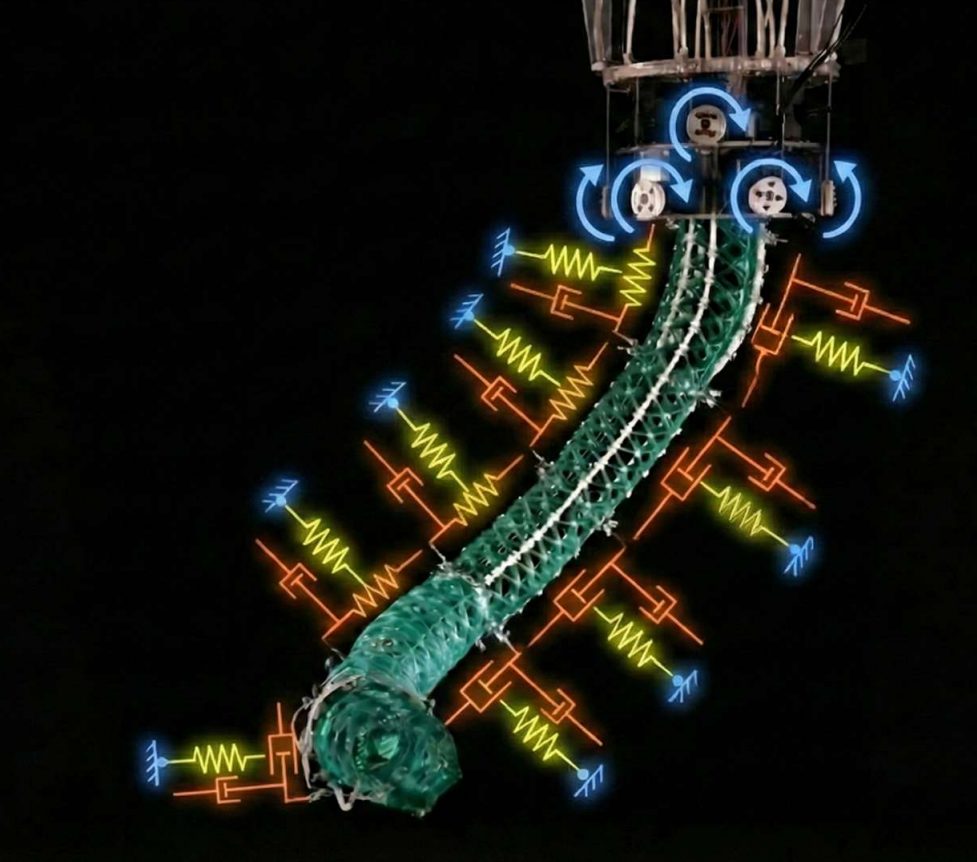
Virtual Model Control of a Soft Compliant Manipulator
Soft continuum robotic arms offer unparalleled dexterity and compliance over rigid bodies, thus facilitating safe and robust interactions with environments. These characteristics make them ideal for diverse applications, such as collaborative robotics or medical contexts. However, due to their virtually infinite degrees of freedom, control of these systems has always been a challenge. Various control strategies have emerged, ranging from kinematic controllers to data-driven methods. However, most approaches disregard the inherent compliance of the robot. They impose artificial rigidity on the system, eventually negating the structural flexibility that constitutes its primary advantage. As the main intelligence of the robot is… Read more
-
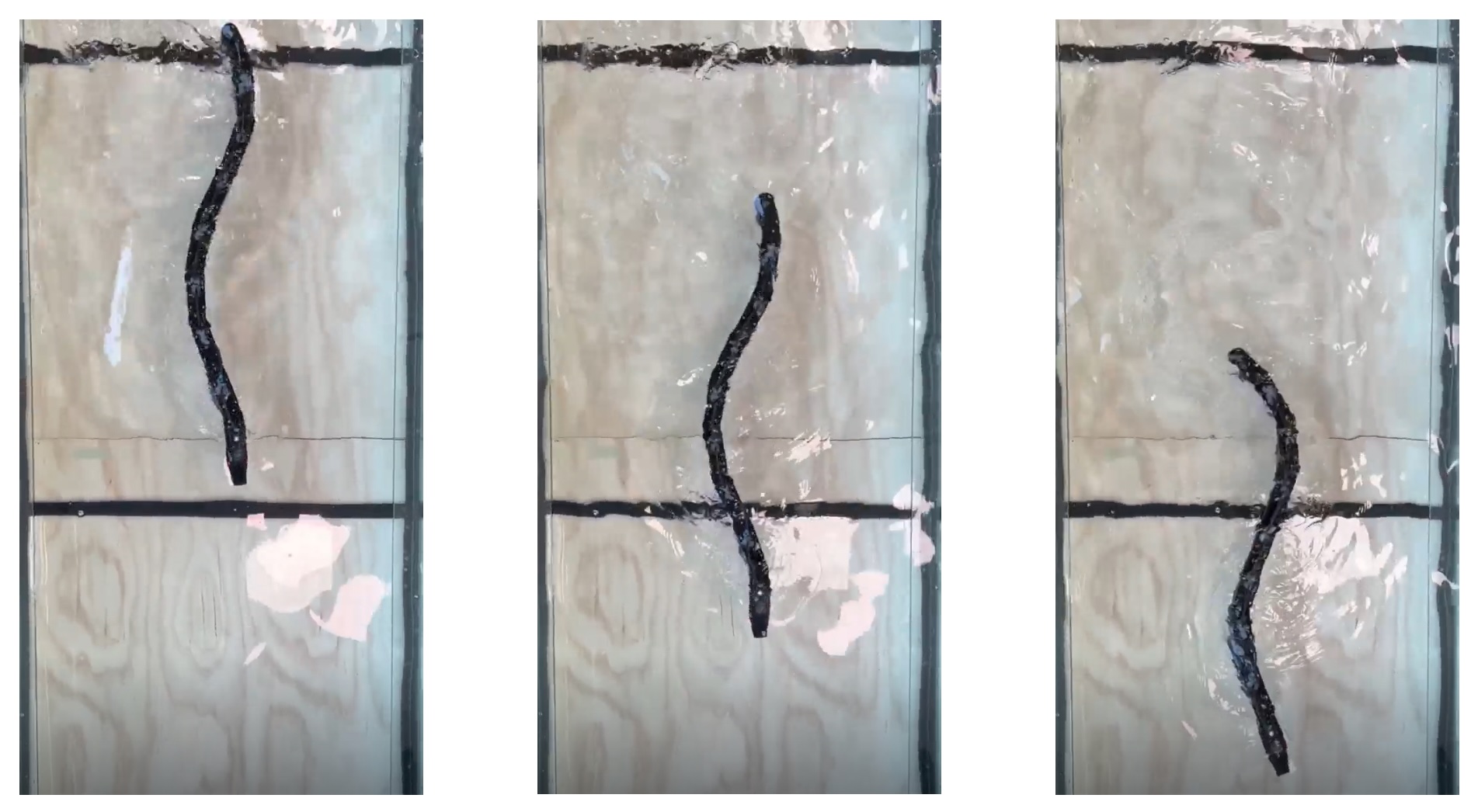
Control of an aquatic snake robot inspired by lampreys’ Central Pattern Generator
Aquatic robots inspired by snakes or eels can move with extreme agility and maneuverability, and are able to swim through narrow spaces and confined environments, opening the possibility to use these robots for environmental monitoring, search and rescue or infrastructure inspection. This robot is composed of nine modules that move generating a wave traveling from the head to the tail, which pushes water backwards, propelling the snake robot. The objective of this thesis is to design a control algorithm to generate the movement based on Central Pattern Generator (CPG), which is a neuronal circuit able to generate rythmic outputs. This… Read more
-
Real-time optimal transport of robotic swarms in fluids in 3D domains
Optimally guiding large-scale swarms of drones, underwater vehicles or nanoparticles moving in a fluid is a crucial task in several fields, ranging from medicine to smart delivery. To steer the swarm dynamics avoiding obstacles, controllers must be able to rapidly adapt the optimal action to changes in the external environment, as often happen in applications. High-fidelity solvers for PDE-constrained optimization problems based on, e.g., Finite Element Method (FEM), do not meet these requirements due to the computational burden entailed. This thesis aims to employ non-intrusive nonlinear reduced order models based on deep learning to optimally and rapidly drive swarms moving… Read more
-
Study of the propulsive performance of fins
The most common propulsive strategy of fishes and cetaceans is the Body-Caudal fin movement in which the animal undulates or oscillates its body, pushing backward the surrounding water. Most of the thrust is generated by the movement of the caudal fin, and every fish has a peculiar fin shape with a particular motion law, which determines different swimming performances. This thesis aims to understand the advantages and disadvantages of different fins both numerically, using CFD simulations, and experimentally, using a dedicated test bench. The experiments will be conducted at the Bioinspired Robotics Lab @ PoliMi Lecco. Read more