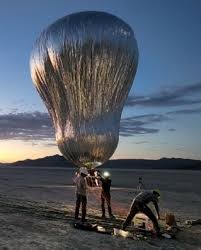
Venus is emerging as one of the most compelling targets for planetary exploration. Unlike traditional landers, future concepts envision long-duration aerial robotic platforms (“aerobots”) capable of navigating the Venusian atmosphere for weeks or even months, operating in cloud layers where temperature and pressure are Earth-like. Recent JPL developments include variable-altitude aerobots able to actively control buoyancy and autonomously explore the Venus atmosphere while performing atmospheric, geological, and potentially astrobiological investigations.
This thesis will focus on mission planning, autonomous navigation, and operational optimization for future Venus aerobot missions. The student will investigate trajectory design, atmospheric navigation, altitude-control strategies, science-operation scheduling, and robust decision-making under uncertain atmospheric dynamics and communication delays. Particular attention will be devoted to variable-altitude balloon systems, orbital relay coordination, energy-aware mission planning, and autonomous adaptation to changing environmental conditions.