
Autonomous Underwater Vehicles (AUV) are subject to highly non-linear hydrodynamic forces, significant parametric uncertainty, and unpredictable environmental disturbances, all of which make robust low-level control a persistent open challenge. This thesis investigates control strategies for AUV motion control with a focus on robustness, the ability of a controller to maintain acceptable performance despite uncertainty in vehicle parameters and environmental conditions.
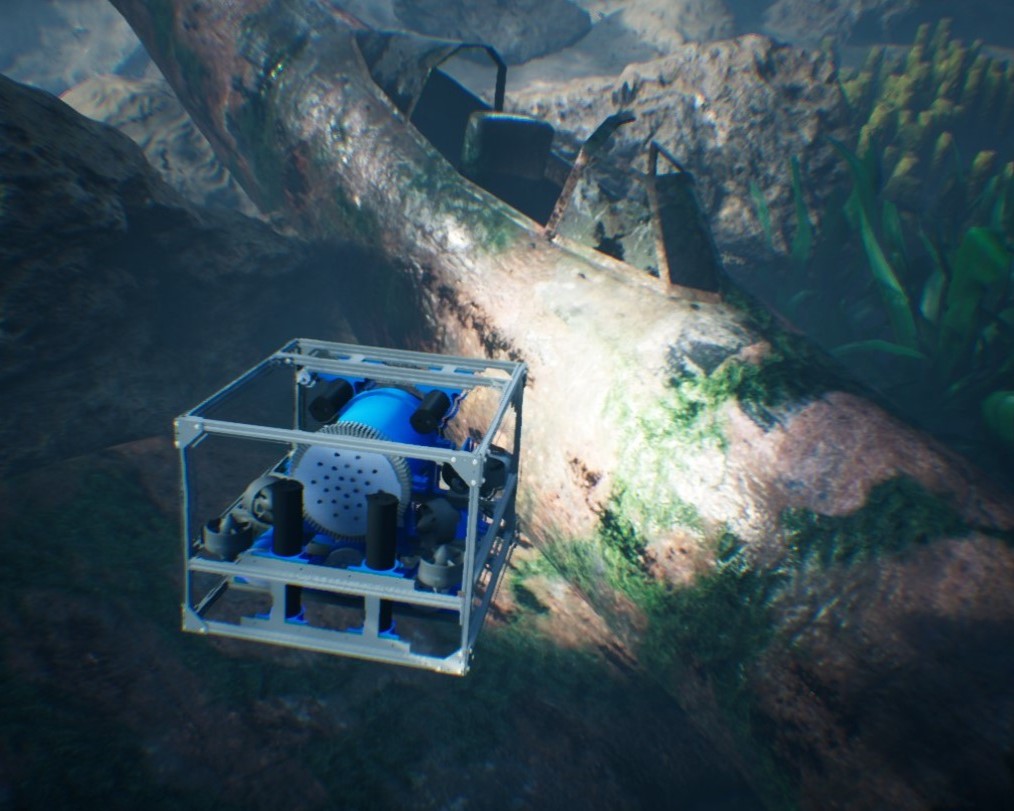
The work begins with a survey of available simulation environments for AUV dynamics, characterising how different tools model hydrodynamic effects and how their predictions diverge under parameter variations. Building on this, a systematic study of parametric uncertainty is conducted, varying mass, damping, and thruster coefficients within realistic bounds, to understand how sensitive different control architectures are to modelling errors and to quantify the sim-to-real gap. The control strategies considered range from classical approaches (PID, LQR) to model-based (MPC) and learning-based methods (Reinforcement Learning), evaluated on standardised low-level tasks under the identified uncertainty conditions. The goal is to identify which approach, or combination of approaches, best balances performance and robustness, laying the groundwork for deployment on a physical AUV platform.
Contacts: tommaso.scudeletti@polimi.it, paolo.schito@polimi.it, francesco.braghin@polimi.it