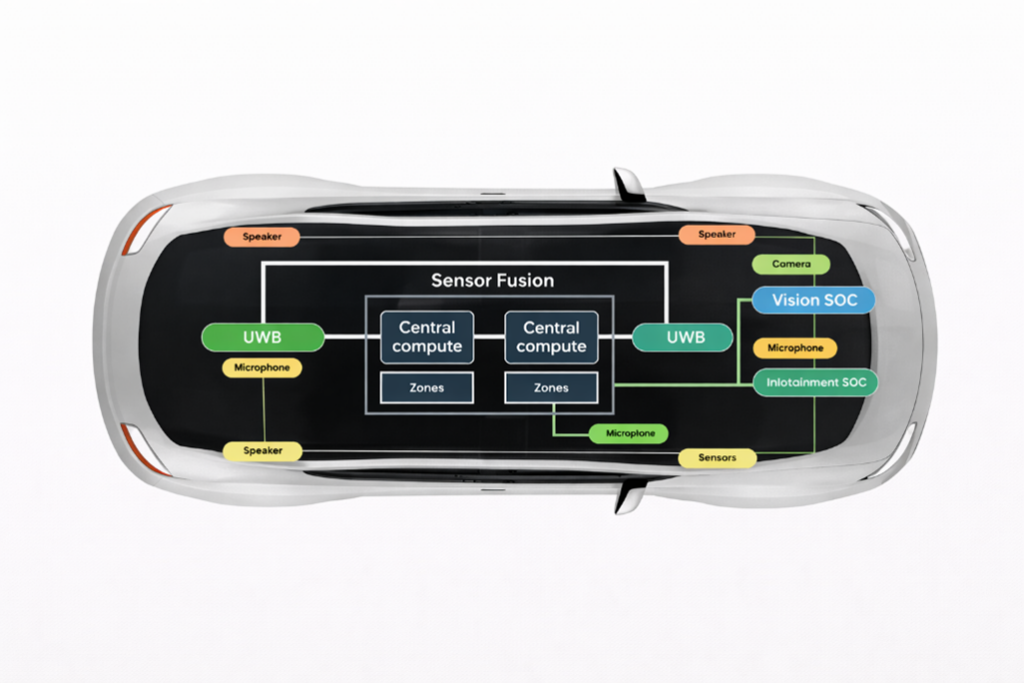
This thesis investigates the feasibility of replacing traditional rule-based vehicle software with an embedded AI agent capable of managing component-level vehicle functions. Instead of deterministic logic, the AI system would be trained to reproduce expected behaviours of actuators such as wipers, convertible roof systems, lighting, or other basic functions. The research will address training strategies, real-time execution constraints, safety validation, explainability, and cybersecurity implications. The goal is to assess whether AI-based function orchestration can achieve robustness and reliability comparable to conventional software architectures.
The thesis will be carried out in collaboration with a car manufacturer, ensuring alignment with automotive software architecture standards.