
Tag: wave propagation
-
-
Metamaterials-based structural health monitoring
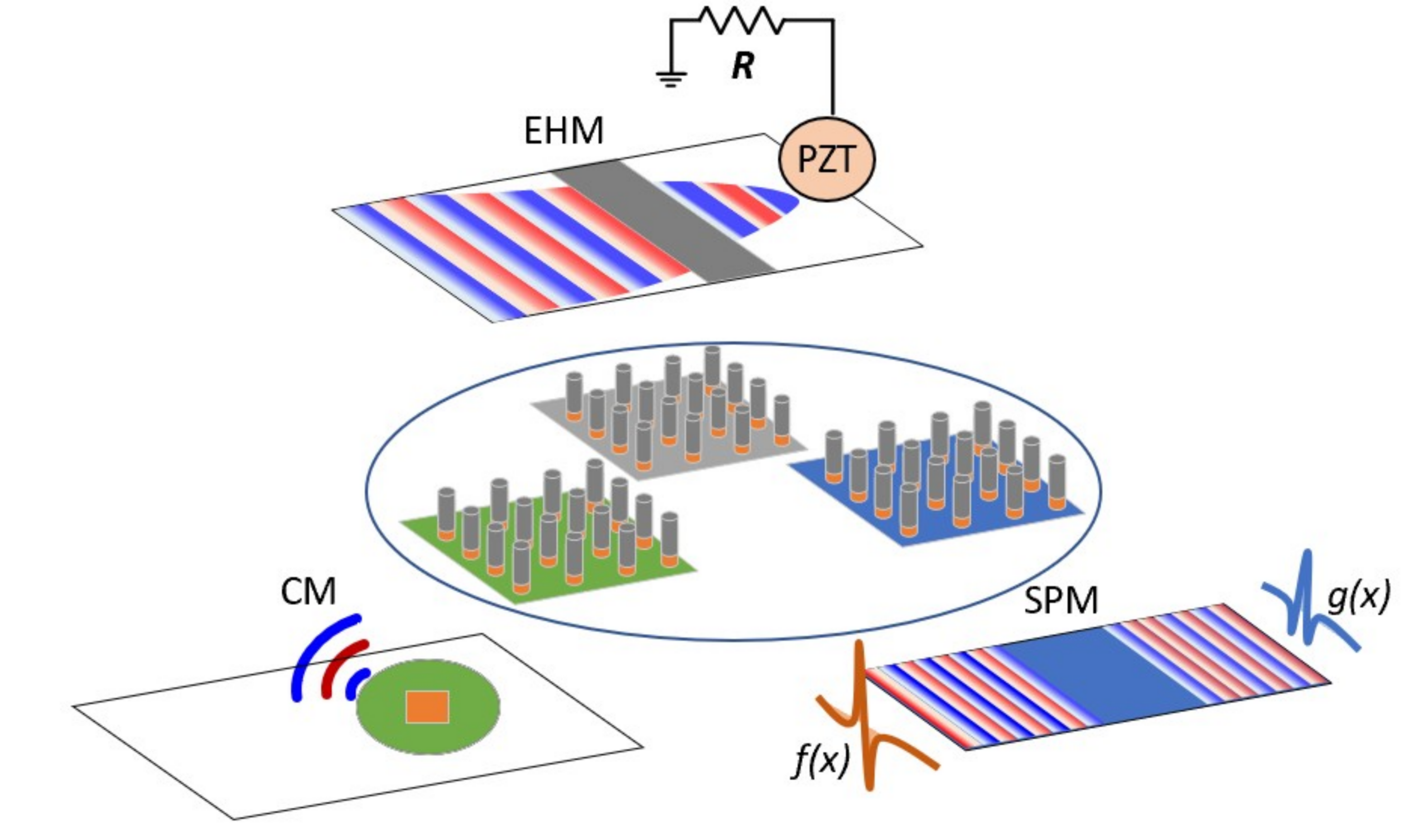
The aim of this thesis is to explore numerically and experimentally the fundamentals of wave elastodynamics in active, nonlinear, and topological metamaterials, and to identify functional behaviors that can be engineered to realize modules with a well-defined functionality. The implementation, then, consists of a network of modular transducers that can be easily embedded in a host structure and with
-
Metamaterials-controlled microfluidics
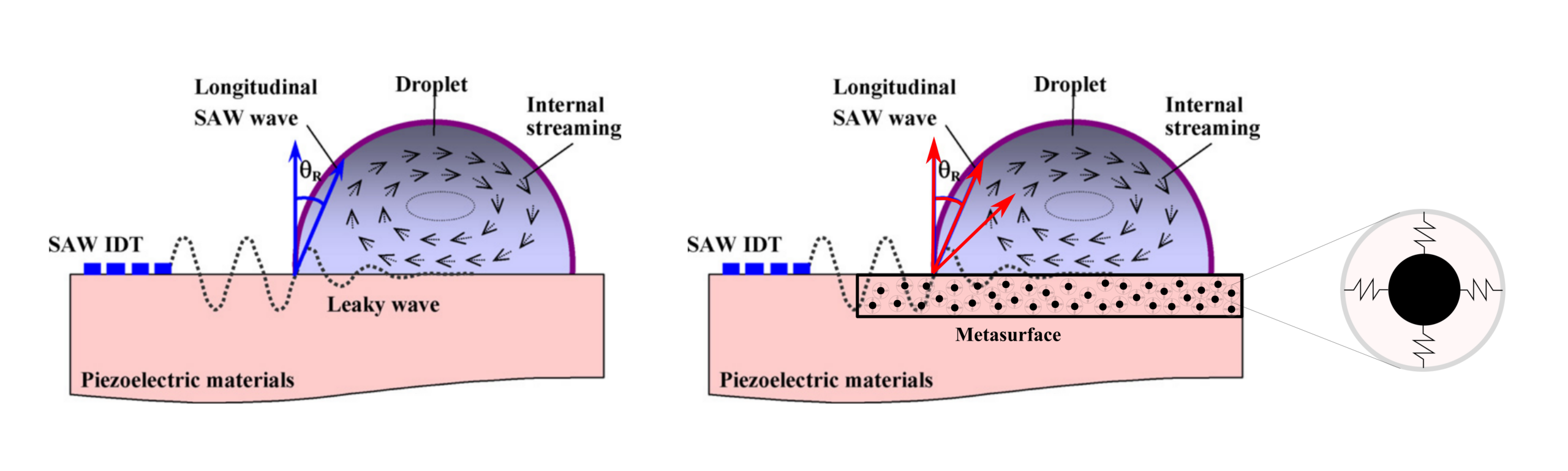
Leaky waves exist in correspondence of a boundary between a fluid, when the velocity of the wave propagating in the solid is greater than that propagating in the fluid. As a result, there is a radiation mechanism that takes place, whereby the energy, initially sitting in the solid, propagate in the fluid at a fixed
-

Metamaterial-based physical neural networks and analog computing
Elastic metamaterials are formed by a spatial arrangement of small-scale unitary elements, yielding unusual dynamic characteristics at the macro-scale. Each element can be seen as a “mirror”, that is capable of refracting or stopping waves and vibrations to the next-neighbours. From a topology viewpoint, artificial neural networks (ANNs) and metamaterials share a similar structure, whereby
-
Design of a metamaterial for a novel MEMS mechanical circulator
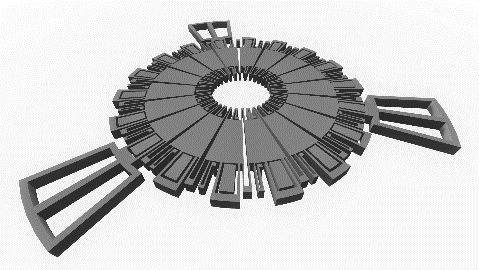
Several works in literature and from our research group have shown that periodic structures with space-time varying properties lead to a non-symmetric (non-reciprocal) response. In short, in some frequency intervals (band gaps), these metamaterials allow the propagation of waves only in one direction and block them in the opposite direction. This thesis aims to design
-
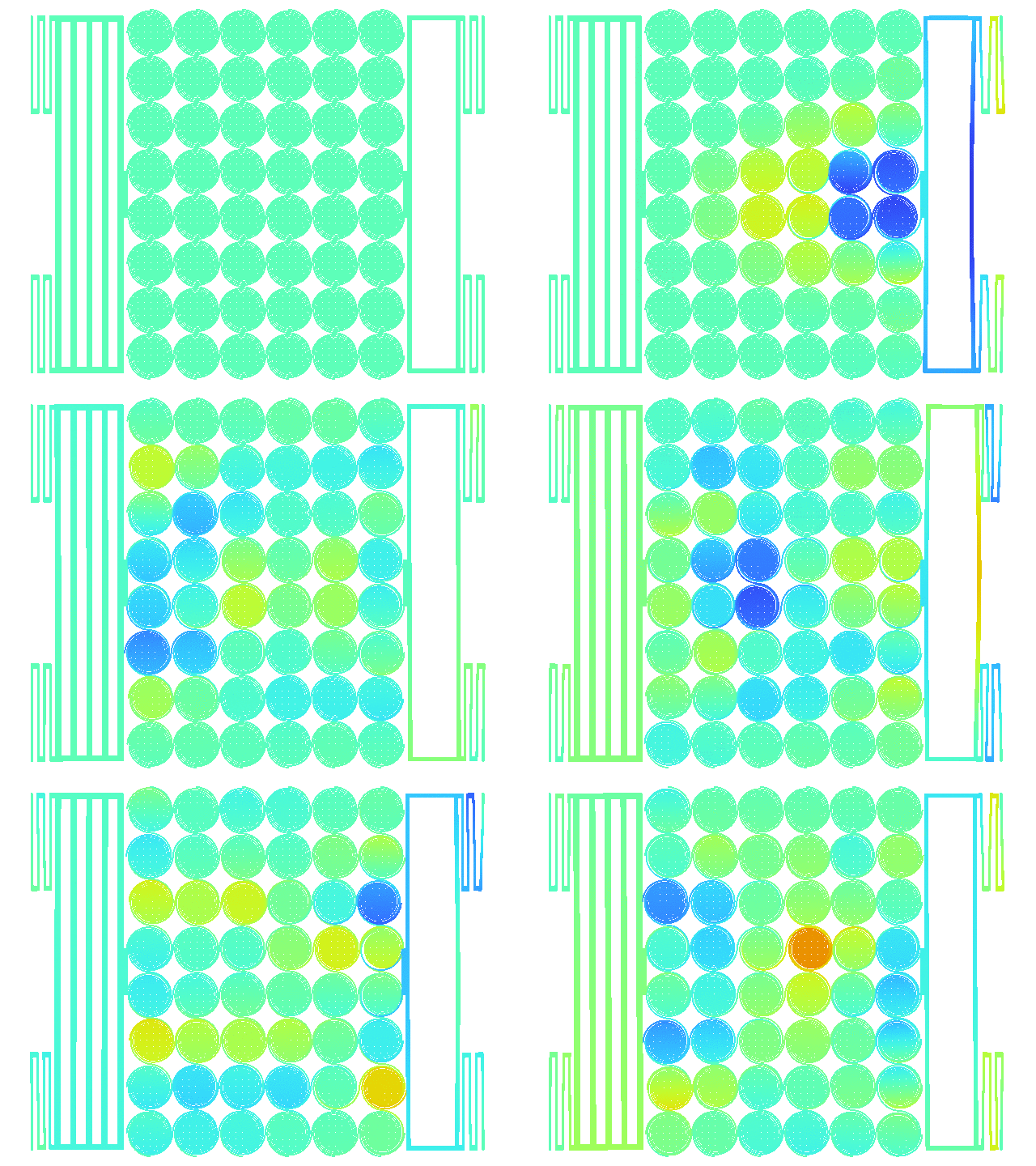
Active & passive meta-MEMS devices for signal processing
During this thesis, the student will design a multifunctional metastructure at the micro-scale, where a tailored arrangement of unit cells allows performing certain operations to an incoming elastic signal. Examples that we want to explore are (i) performing derivative/integrals and arbitrary transfer functions, (ii) frequency conversion, (iii) Wave-diode effect (nonreciprocity), (iv) waveguiding, trapping and focusing.
-
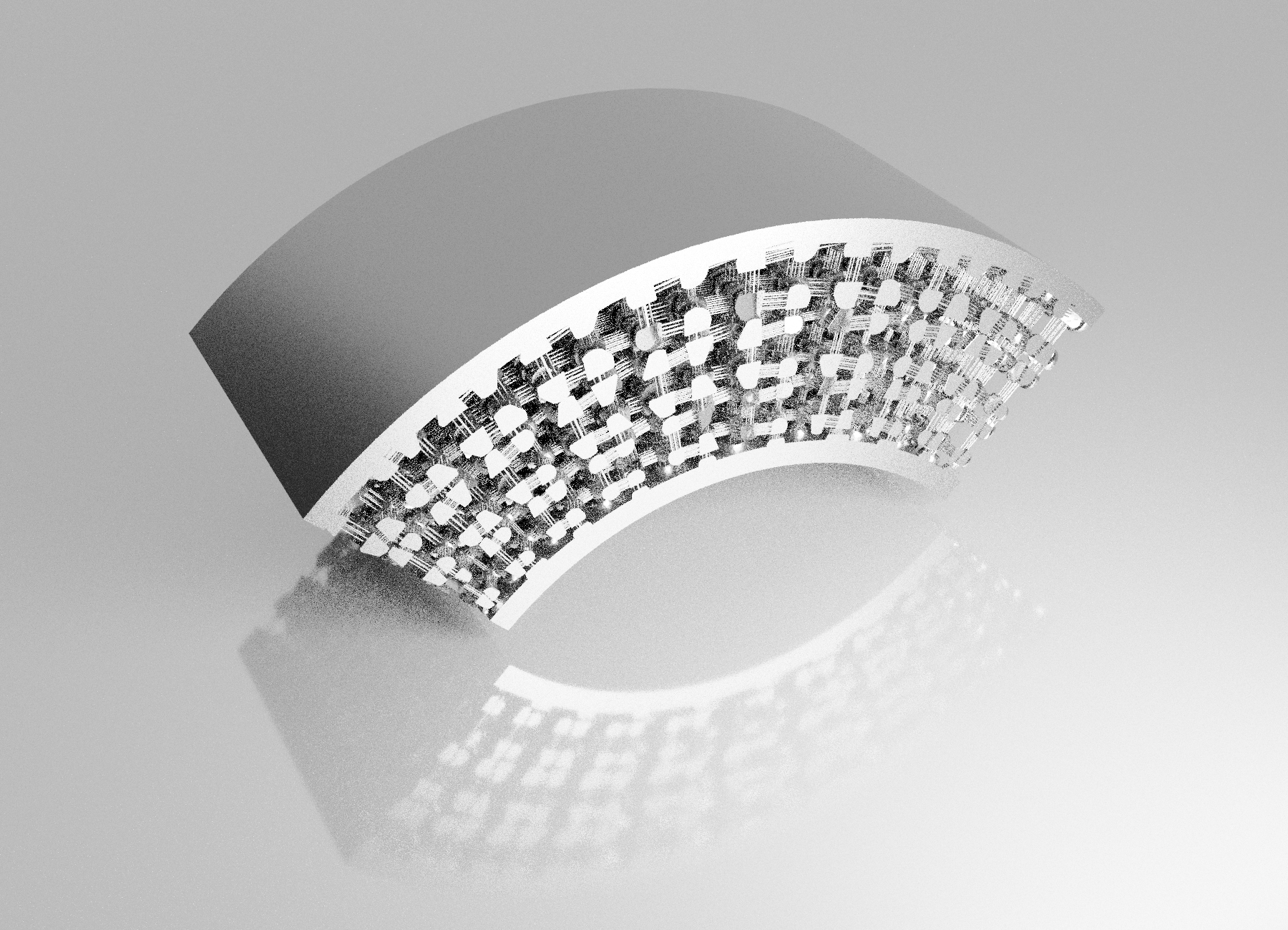
3D acoustic invisibility cloak
Acoustic metamaterials gave birth to the engineering counterpart of amazing cutting-edge novelties from physics, which discovered and proved unusual ways for steering pressure waves. Outcomes such as superlensing and invisibility cloaking are the most famous and impressive applications. However, the practical realization of these applications remains a significant challenge. Our research group is dedicated to
-
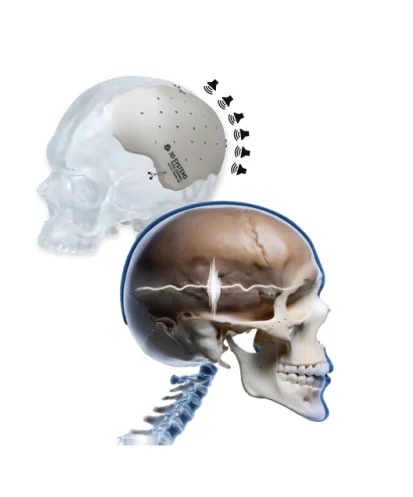
Transcranial focused ultrasound via metamaterial engineering
DETAILS: the aim of this project is to study a metamaterial structure capable of focusing ultrasound from outside to the inside the skull. In this field, the state-of-the-art ultrasound technology features a hemispherical transducer array with many piezoelectric elements operating around a central frequency of 650 kHz. By leveraging complex electronic circuits the system allows