
-
Enhancing Human-Robot Interaction in motor-cognitive game for older adults
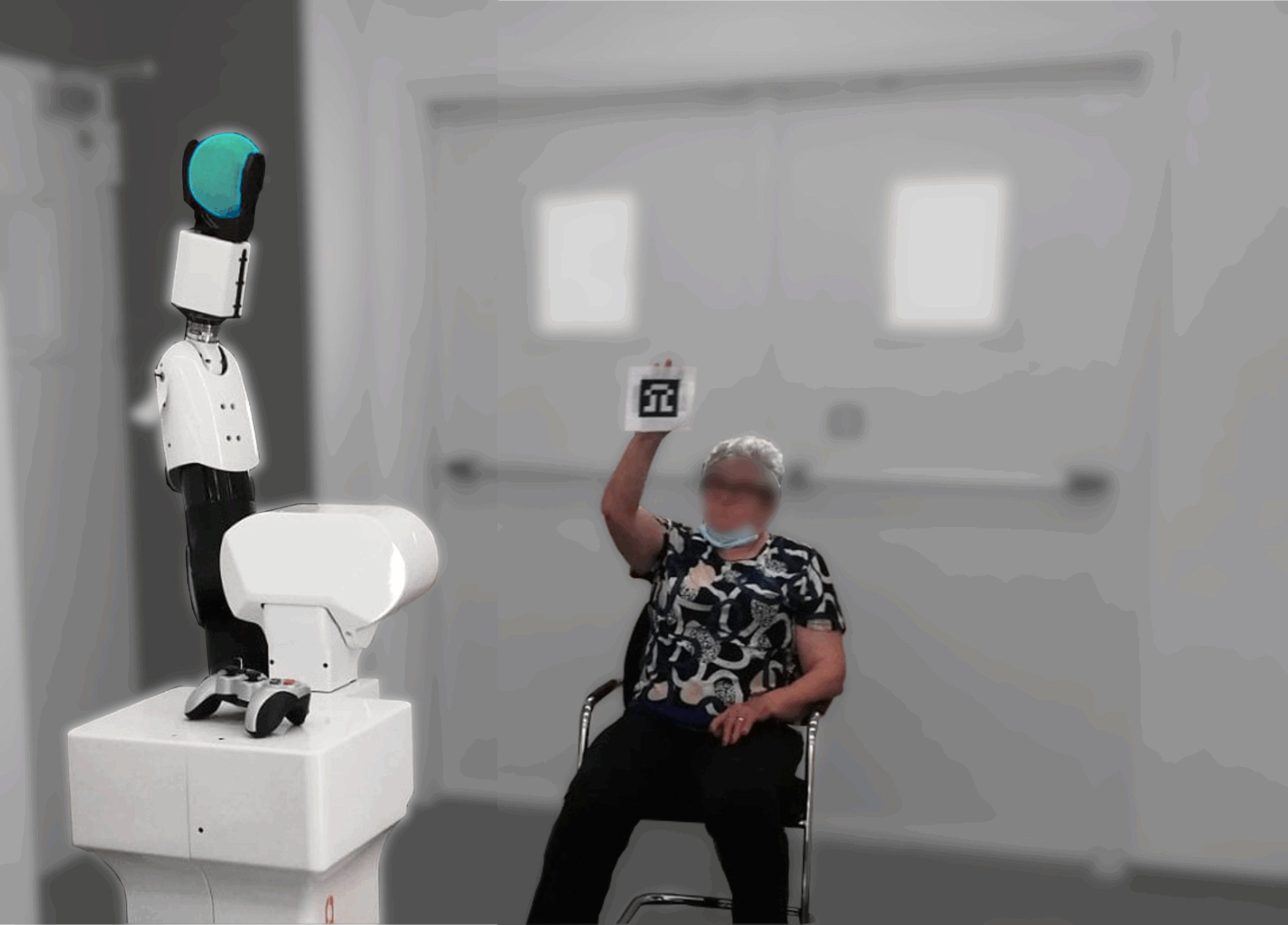
As the aging population continues to grow, service robots are emerging as valuable tools to promote active and healthy aging. Previous work at the WE-COBOT Lab developed a motor-cognitive game for the TIAGo robot (PAL Robotics), combining physical and memory training through embodied interaction [Pozzi, Gandolla, Braghin, Robot-Mediated Gesture-Based Memory Game for Older Adult Psychophysical Stimulation. IEEE IROS 2025]. In the game, the robot mimes letters with its arm, and the user must recognize and imitate them, promoting motor and mental engagement. Pilot tests with older adults confirmed the potential of this approach but also revealed practical limitations in gesture tracking… Read more
-
A robotic walking assistant for older adults in long-term care
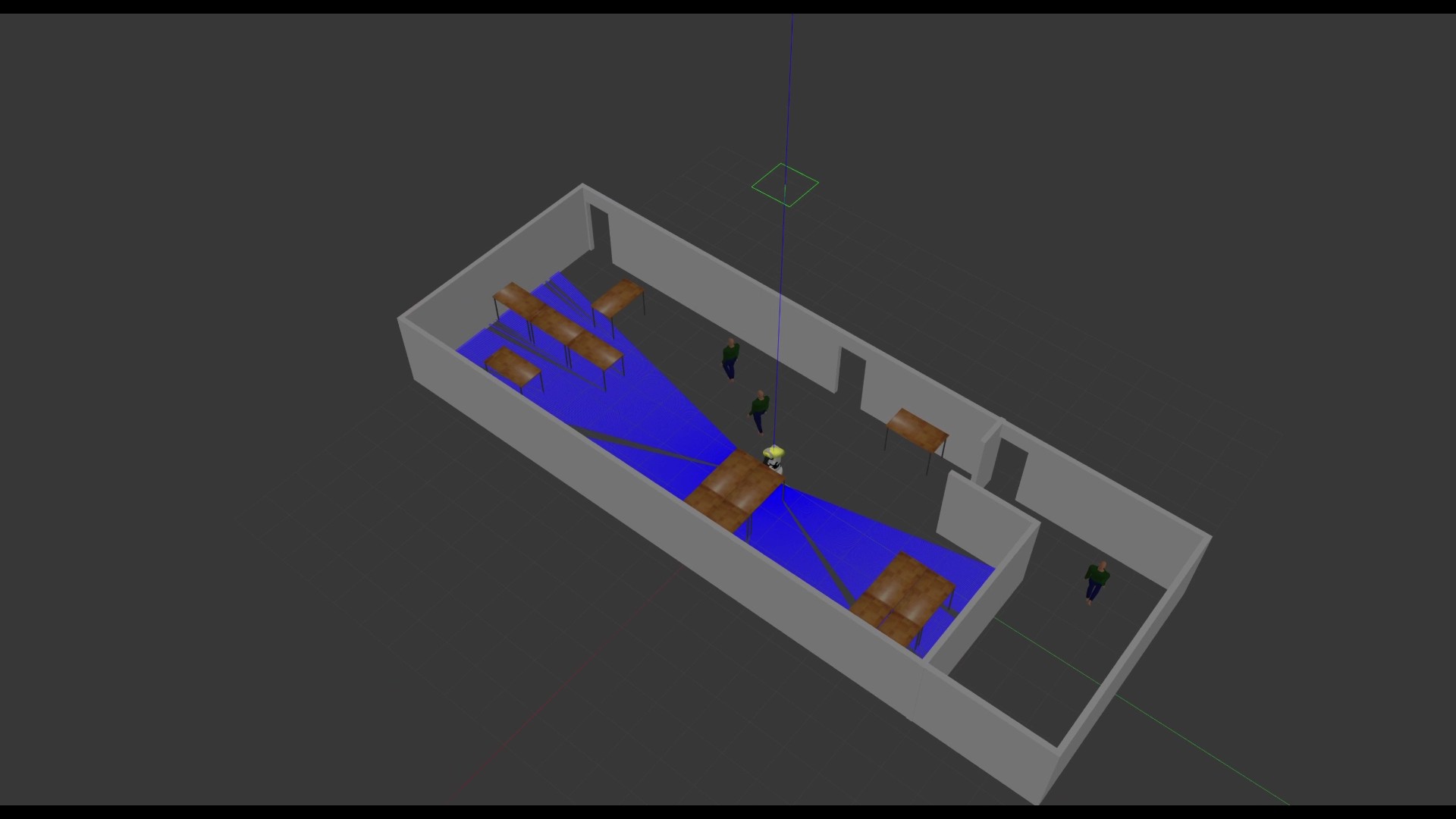
Assistance and monitoring during elders’ daily walk is something that stakeholders expect from an assistive robot. Though cart-like walkers represent a possible solution, they are limited in versatility. Contrarily, a humanoid walking assistant has the potentiality to accomplish many other tasks and to engage in social interactions, extending the caregivers’ activity. The student will develop and validate sensor-based solutions for robust line-following navigation and user tracking in a (partially) known, dynamic environment. Working with the TIAGo robot (PAL Robotics), the candidate will identify and integrate sensors (e.g., RGB/RGB-D cameras, IR sensor arrays, event cameras…) to enable the robot to move… Read more
-
Physics-informed smoothing and model identification in dynamical systems
Motivation of the study. Many real-world phenomena produce time series representing the evolution of physical states, examples include the measurement of neuronal activity in neuroscience, the tracking of mechanical systems in engineering, and the monitoring of ecological processes. However, these data are often noisy, incomplete, or measured at different sample rates, making it challenging to reconstruct the true underlying signals. Standard smoothing can help, but neglecting known physics may lead to inaccurate results, especially with poor or sparse data. In contrast, physics-informed methods embed mechanistic insights into the smoothing framework, leveraging prior knowledge to guide state reconstruction. Beyond state trajectories reconstruction, model identification –… Read more