
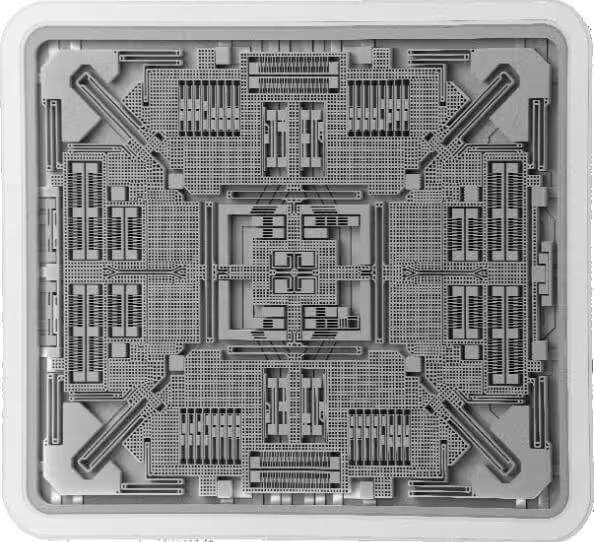
MEMS gyroscopes are micro sensors for angular rate, which can be found in almost any electric device, from smartphones to drones, cars, and robots. The trend of the industry nowadays is to go for ever smaller footprint sensors so that they can be embedded in a smaller system, absorb less energy, and last (but not least), more devices can be produced per unit area of the silicon wafer, thus increasing the revenues. This thesis aims to study a miniaturized version of pre-existing gyroscope layouts, considering nonlinear effects using state-of-the-art methods and (possibly) including multi-physics effects (e.g. electrostatics). Depending on the results, the sensor might be produced and tested in STMicroelectronics labs.
Contacts: Jacopo Marconi