
Author: Lorenzo Bernardini
-
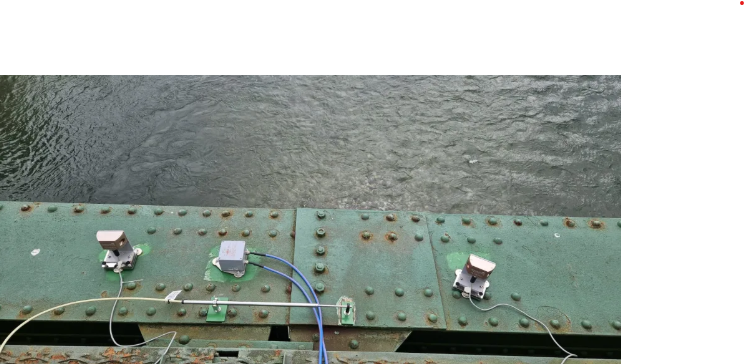
Fault Detection and Management in Sensors for Structural Health Monitoring of Railway Bridges
fault detection, permanent monitoring system, Railway bridges, sensors fault, structural health monitoringStructural health monitoring (SHM) of railway bridges heavily relies on data collected from sensor networks (accelerometers, strain gauges, data acquisition systems). However, technical faults in sensors – such as electrical failures, connection errors, drift, or hardware malfunctions – may compromise the reliability of the measurements. In some cases, fault-induced signals can be mistakenly interpreted as
-
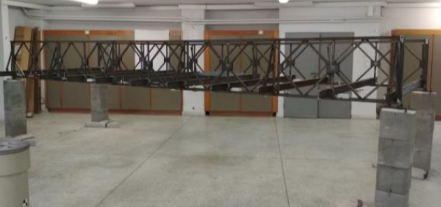
Realization of a laboratory scaled steel truss bridge
As direct damage application on full-scale bridge structures is unfeasible, scaled laboratory models provide a suitable alternative for the validation of structural health monitoring (SHM) algorithms. Such models enable the introduction of controlled damage with known location and extent. The objective of this thesis is to design and construct a scaled laboratory model of an
-
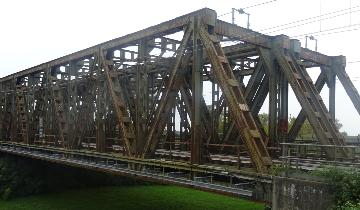
Bridge FE model updating through on-field continuous measurements
FE model updating involves calibrating unknown and uncertain parameters to make the numerical model response match with the experimental measurements. For a bridge FE model, an updated model can serve multiple purposes, including damage detection, informed reinforcement design and the evaluation of new operational scenarios. Within this context, the student will implement a model updating
-
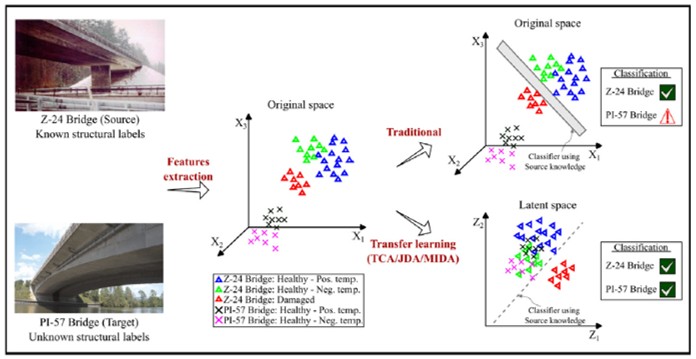
Transfer Learning and Domain Adaptation for Bridge Monitoring
Structural health monitoring of bridges and viaducts is a crucial field to ensure infrastructure safety and durability. However, one of the main challenges is the scarcity of available data for newly monitored structures, which makes it difficult to train reliable machine learning models. Additionally, assessing the health condition of a structure at the beginning of
-
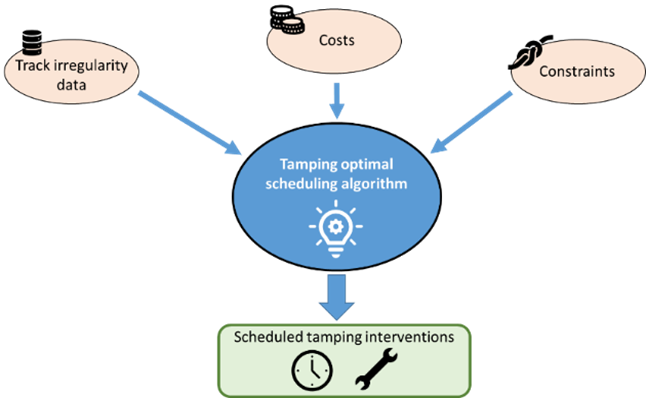
Ballast degradation analysis for optimal tamping scheduling and management
Optimised management of railway networks, subjected to increasing travelling loads and degradation of track components, requires deep understanding and analysis of degradation phenomena. Ballast differential settlement causes an increase in track geometrical irregularity, decreasing passenger’s comfort, and can cause local failure of the railway line. The focus of this thesis work is the analysis of
-
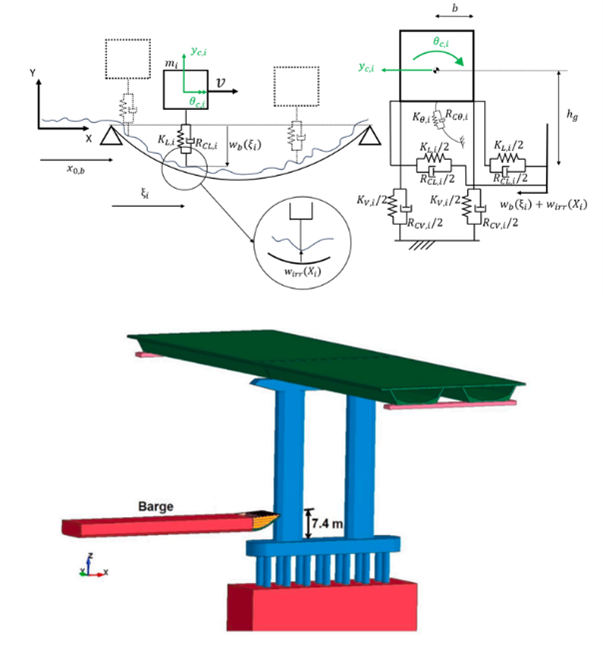
Simplified 2D VBI model to study train safety during ship-bridge impact events
Over the past two decades, the growth of maritime traffic and the increasing number of sea-crossing bridges have emphasized the importance of accounting for ship-impact during bridge design. In runability analyses for train running safety evaluation, vessel-bridge collisions must be incorporated. To manage the large number of simulation required, simplified models of vehicle-bridge-interaction (VBI) can
-
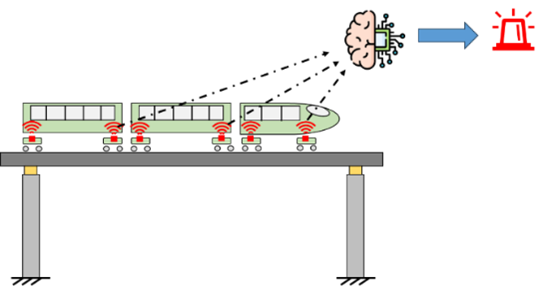
Drive-by techniques for railway bridge structural health monitoring
Drive-by approaches aim to assess bridge structural health status exploiting on-board train measurements. Precisely, damage occurrence on the bridge can be reflected in the dynamic interaction between the train and the bridge itself, and thus in the train response. The focus of this thesis is to improve previously developed signal processing procedures to develop and
-
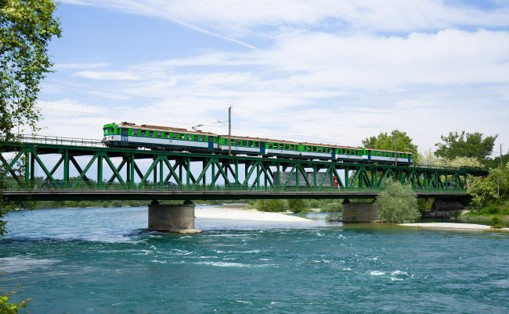
Data-Driven Structural Health Monitoring of Railway Bridges through Signal Decomposition Methods
Anomaly detection, Machine Learning, Railway bridges, Signal processing, structural health monitoringContacts: Viviana Giorgi, Gabriele Cazzulani, Claudio Somaschini Structural health monitoring of bridges and viaducts is crucial to ensure safety and operational reliability. A promising approach relies on the analysis of acceleration signals recorded during train passages, which contain valuable information about the structural dynamic state. However, extracting robust diagnostic indicators from such high-frequency signals is challenging due to
-

Macro-mechanical sectional modelling of ballast settlement phenomenon
Optimized management of railway networks, facing growing travelling loads and ageing of track components, requires a thorough understanding of degradation processes. Given ballast complex behaviour, its degradation is particularly critical in track maintenance management. The thesis focuses on the development and refinement of a macro-mechanical cross-sectional model that can reproduce ballast settlement under long-term cyclic