
-
Design and testing of a wireless pressure-tap anemometer for distributed wind monitoring
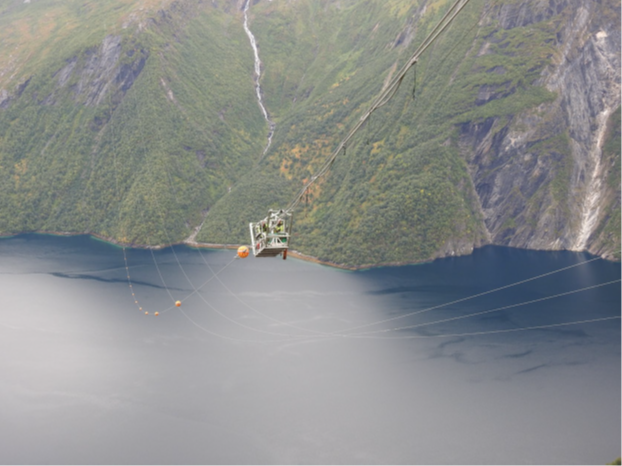
Background and Motivation Accurate characterization of wind loading is fundamental in wind engineering, particularly for slender and flexible structures exposed to turbulent atmospheric flows. Conventional anemometers provide accurate measurements at a specific location, but their use for distributed wind monitoring can become impractical when measurements are required at multiple points over large structures. This issue is particularly relevant for long-span transmission lines and crossings, such as overhead lines crossing rivers, fjords, or large valleys. In these applications, the spatial variability and correlation of the wind field along the structure can significantly influence its dynamic response. A distributed measurement system capable… Read more
-
Wind Tunnel Testing of Iced Conductor Bundles for Galloping Assessment
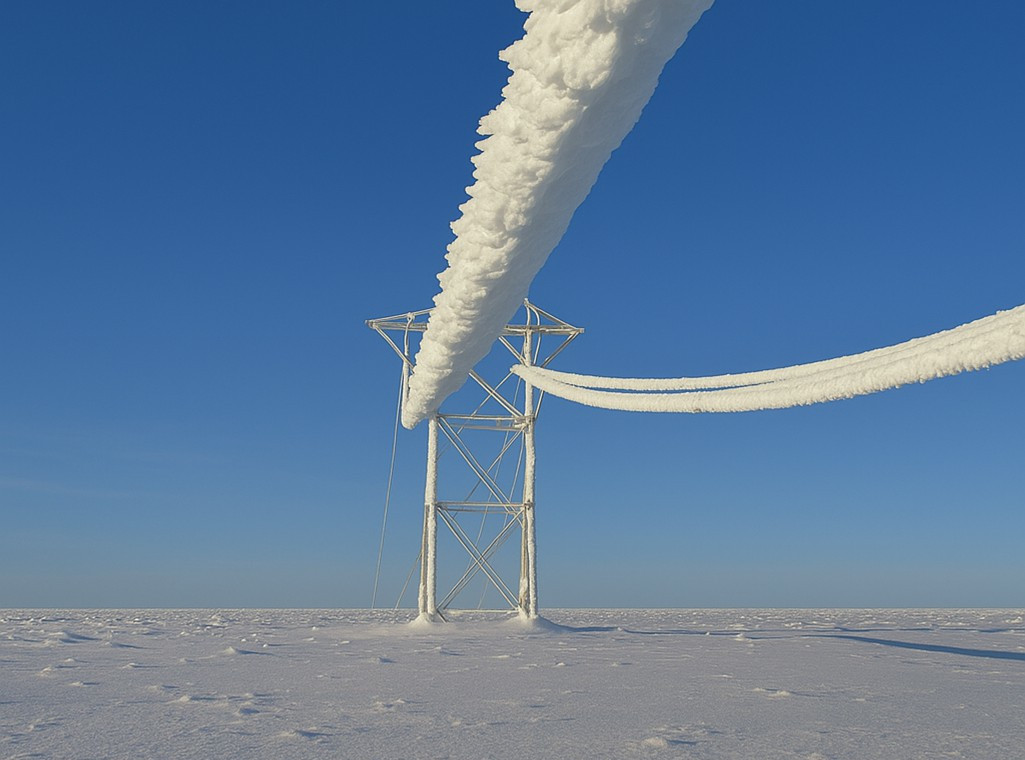
Background and Motivation Galloping is a large-amplitude, low-frequency aeroelastic instability that may develop on overhead transmission lines under specific combinations of wind conditions and ice accretion. Accurate prediction of galloping requires reliable aerodynamic data, including force coefficients and flutter derivatives, which strongly depend on the geometry of the ice accretion and the conductor bundle configuration. Although several experimental studies have been conducted over the past decades, available datasets remain limited and often focus on simplified conductor arrangements. Wind tunnel testing therefore plays a key role in improving the characterization of iced conductors and supporting the development of more accurate galloping… Read more
-

Evaluation of athlete effort during competitive bike activities
In the wind gallery of Politecnico di Milano, competitive athletes perform aerodynamic evaluations to improve their performances. The goal is to define the better position and/or equipment to be as competitive as possible from an aerodynamic point of view. Nothing is ever said, however, about the possible differences in terms of the effort of the athlete in the different conditions. The aim of this work is, therefore, to set up an experimental set-up and procedure to investigate whether the best aerodynamic position/equipment is also convenient from a metabolic and muscular fatigue point of view. The work phases will be i)… Read more