
Tag: sensors fault
-

Severity-Guided Adaptive Sensor Fusion: A Dynamic Weighting Framework for Resilient Autonomous Navigation under Sensor Failures
Introduction Reliable operation of Autonomous Vehicles relies heavily on multi-modal sensor fusion (combining Camera, LiDAR, and Radar) to compensate for individual sensor weaknesses. However, standard deep learning fusion architectures typically operate under the assumption of nominal sensor health. Consequently, they lack a fail-safe mechanism to handle corrupted data streams caused by environmental degradation (e.g., severe
-

4DRadar-Guided Generative Inpainting: Robust LiDAR Restoration via Latent Diffusion Models under Sensor Failures and Adverse Weather
Introduction LiDAR sensors are the backbone of precise 3D perception in autonomous vehicles, but they suffer from significant degradation in adverse weather (scattering in fog/rain) and are prone to hardware failures. While traditional filtering removes noise, it leaves geometric gaps that can blind downstream detectors. Conversely, 4D Imaging Radar is resilient to weather but lacks
-
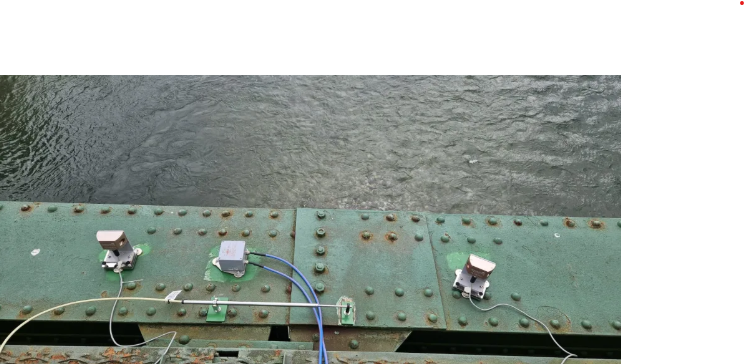
Fault Detection and Management in Sensors for Structural Health Monitoring of Railway Bridges
fault detection, permanent monitoring system, Railway bridges, sensors fault, structural health monitoringStructural health monitoring (SHM) of railway bridges heavily relies on data collected from sensor networks (accelerometers, strain gauges, data acquisition systems). However, technical faults in sensors – such as electrical failures, connection errors, drift, or hardware malfunctions – may compromise the reliability of the measurements. In some cases, fault-induced signals can be mistakenly interpreted as