
Author: Edoardo Sabbioni
-
Effectiveness of GLOSA in mixed traffic conditions
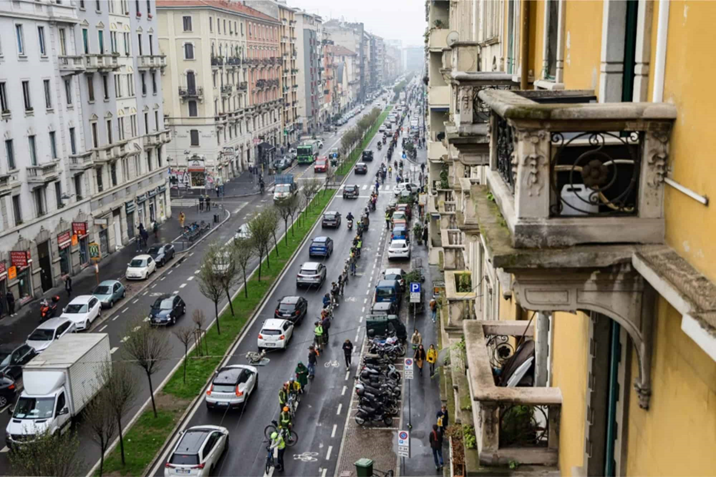
GLOSA (Green Light Optimal Speed Advisory) can significantly improve traffic flow by helping drivers adjust their speed to pass through intersections during green phases, thereby reducing unnecessary stops, delays, and congestion. This results in smoother driving patterns and lower emissions. However, the effectiveness of GLOSA depends on factors such as traffic density and the market
-
Development of a multi-vehicle GLOSA
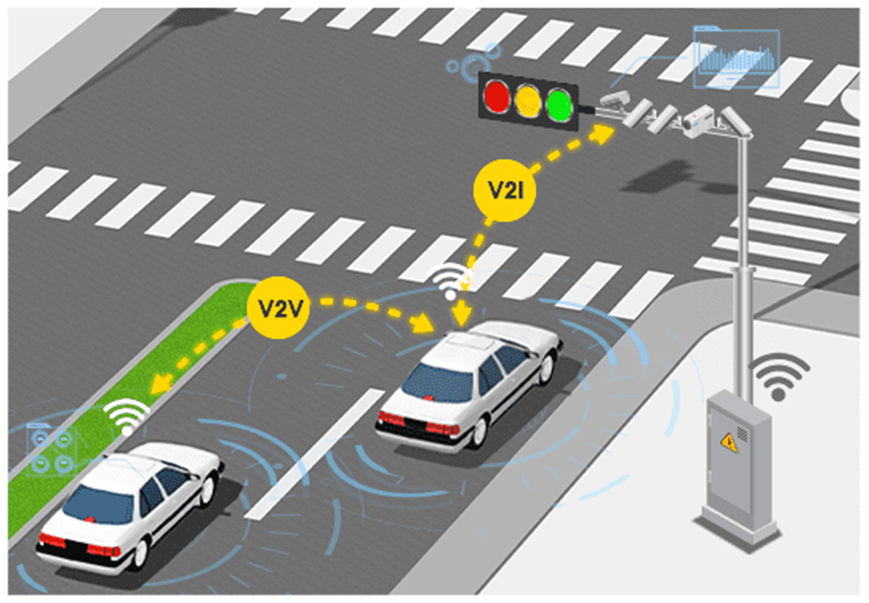
The Green Light Optimal Speed Advisory (GLOSA) is one of the most significant applications in intelligent transportation systems. Existing GLOSA methods compute an advisory speed profile that allows a vehicle to reach one or more intersections during the green phase, thereby reducing travel time and fuel consumption. However, current GLOSA approaches optimize the speed of
-
Optimizing indoor tyre testing for repeatable, comparable data
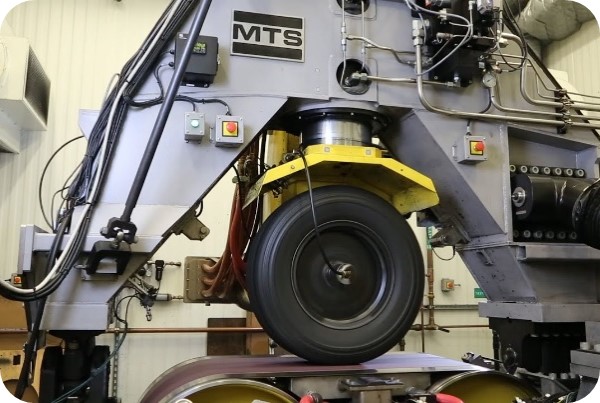
The enhancement of virtual engineering demands continuous improvement in tyre modelling capabilities and in the consistency of model development processes. Most tyre models are parameterized using flat-trac machines equipped with sandpaper belts that simulate road surfaces. While these tests generally provide a reliable representation of tyre behaviour, achieving high repeatability and ensuring comparability across different
-
Correlation and scaling of indoor to outdoor tyre behaviour
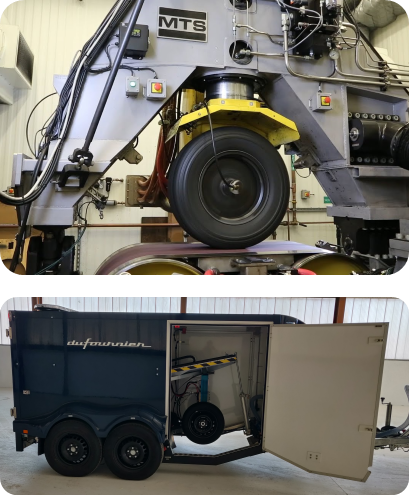
Tyre behaviour is traditionally assessed through indoor tests performed on flat-track machines and outdoor tests conducted with skid-trailers. However, discrepancies frequently arise between indoor and outdoor results. These differences stem from several factors, including: The aim of this thesis is to investigate the root causes of these discrepancies and to improve the correlation between indoor